
 Dogs
 Cats
 Birds
 Horses
 On the Land
 In the Sea
If you share your home with a dog, you already know there’s something especially comforting about feeling that warm little body settle against your legs at bedtime. I’ve had dogs for most of my adult life, and now that I’m older, I notice these small nighttime habits even more. A dog who sleeps pressed up against you isn’t usually being random or clingy for no reason. In most cases, that position is saying something clear about comfort, instinct, trust, or even age-related changes.
Some reasons are sweet, some are practical, and a few are worth paying closer attention to. If your dog regularly wedges against your calves, thighs, or the backs of your knees and stays there for hours, here are 8 surprising reasons why that happens and what it can tell you about how your dog feels when the lights go out.
1. Your dog is following an old pack instinct
Dogs may sleep on sofas and orthopedic beds now, but deep down many still like close body contact when they rest. In a group, animals often sleep touching because it helps them feel protected and connected. When your dog presses against your legs instead of sleeping 3 feet away at the edge of the mattress, that contact can mimic the security of resting shoulder-to-shoulder with trusted companions.
I’ve seen this most clearly with rescue dogs who act independent all day and then become determined little shadows at night. They may circle twice, lean firmly into your shin, and stay there until morning because physical contact lowers their guard in a way distance does not.

2. Your body heat makes you the warmest spot in the room
A dog’s normal body temperature runs a bit higher than ours, but that doesn’t mean they don’t seek extra warmth. Your legs hold steady heat for hours under blankets, and many dogs quickly learn that the area behind the knees or along the calves is warmer than a separate dog bed on the floor. In winter, or in homes where the thermostat drops to 65 to 68 degrees overnight, that difference matters.
Small dogs, short-haired dogs, and seniors tend to do this the most. If your dog starts sleeping especially tight against you during colder months, warmth may be the main reason. I’ve had older dogs ignore an expensive bed completely if my flannel pajama legs were available instead.
3. They trust you enough to sleep deeply beside you
Sleep is a vulnerable state, and dogs know that instinctively. A dog that presses its spine or side against your legs is often choosing the person it trusts most to protect the space around them. That body contact lets them relax more completely, especially during deeper sleep cycles when they twitch, sigh, or change positions without fully waking.
For older owners, this can be one of the most touching parts of living with a dog. If your dog could sleep in several places but returns night after night to your side, that’s not just habit. It’s a sign that your presence feels safe, predictable, and worth anchoring to for six to eight hours.
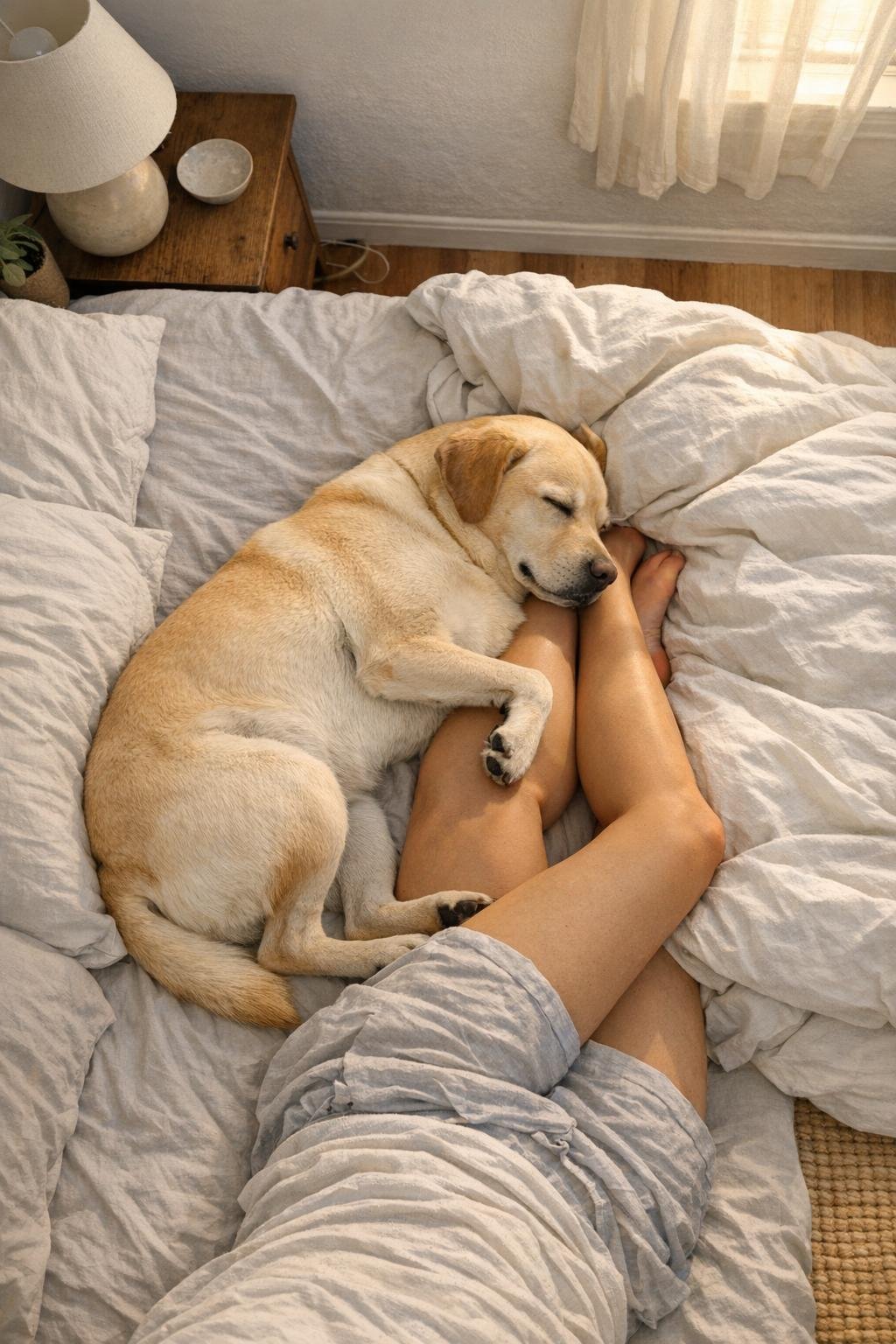
4. Your movements reassure them through the night
Dogs are incredibly aware of movement, breathing, and routine. When they sleep pressed against you, they can feel your legs shift, your feet turn, or the mattress settle. Those tiny signals tell them you’re nearby and everything is normal. It’s almost like a built-in nighttime check-in system.
This is especially common in dogs who dislike sleeping alone after a household change, such as a move, retirement, or the loss of another pet. Even a slight movement at 2 a.m. can reassure them more than a night-light or a blanket on their own bed across the room. To them, contact means the family unit is intact.
5. They may be guarding you in their own quiet way
Not every protective dog stands at the window barking. Some do their watch duty by staying physically connected while they sleep. By positioning against your legs, your dog can monitor your movement, hear changes in the room, and react quickly if something unusual happens. They are at rest, but not entirely off duty.
I’ve known dogs who always chose the foot of the bed nearest the bedroom door, with one side pressed against me and their nose angled toward the hallway. That placement wasn’t accidental. If your dog sleeps touching you while also facing outward, they may be balancing affection with a low-key guardian instinct.
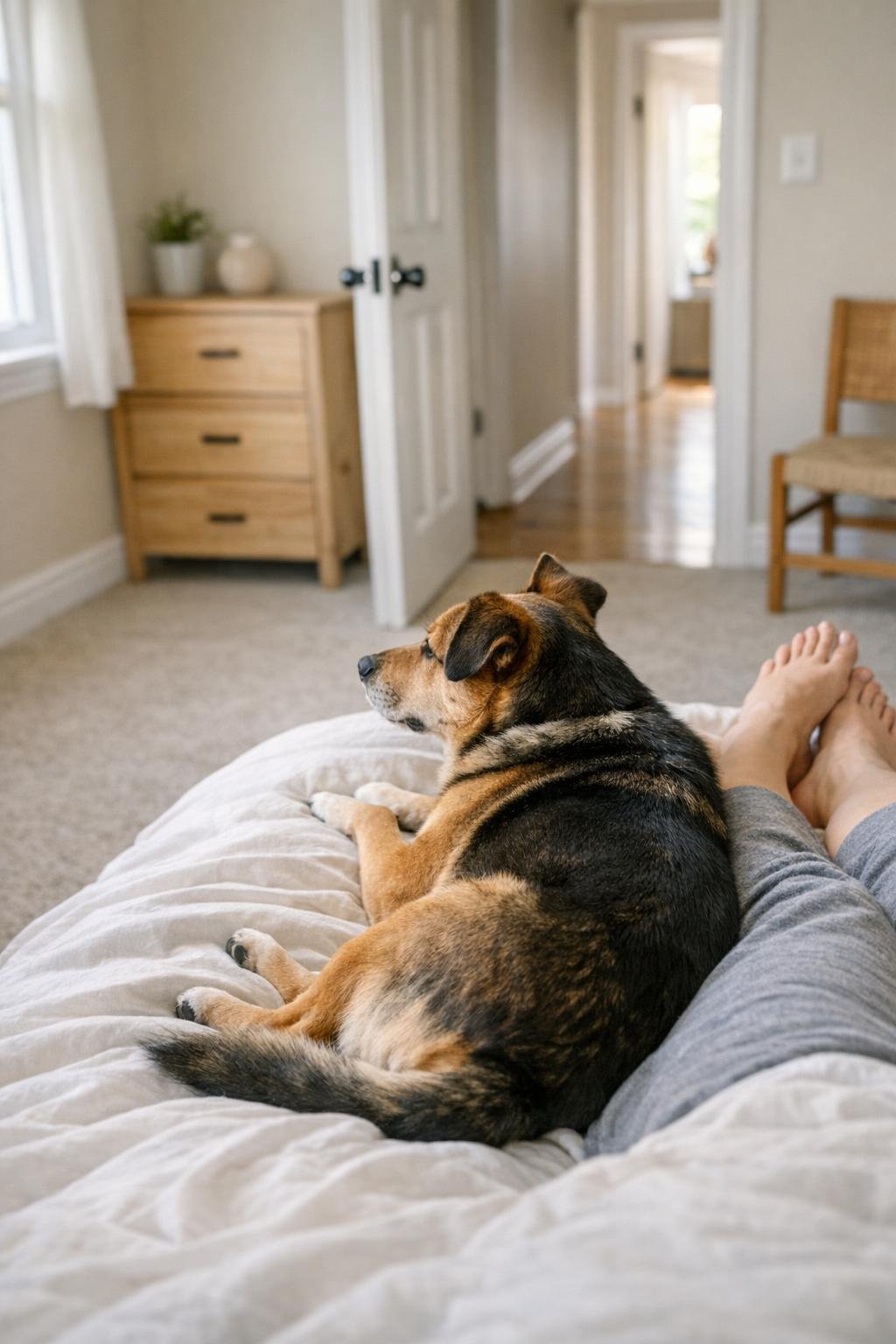
6. Age or joint stiffness can make your legs feel supportive
As dogs get older, they often become choosier about sleep surfaces and body position. A senior dog with mild arthritis in the hips, knees, or lower back may lean against your legs because that contact gives them a stable edge to brace against. It can help them feel less wobbly when settling down and more secure when they need to shift position during the night.
If your dog is 8, 10, or 12 years old and suddenly starts pressing against you more than they used to, pay attention. This doesn’t always mean pain, but it can be an early clue that they’re seeking extra support. I’d especially notice it if they also hesitate before jumping on the bed, take a few seconds to stand up, or circle more than usual before lying down.
7. Your scent helps them stay calm
Dogs experience the world through scent first, and your bed is full of reassuring familiar smells. Your pajamas, lotion, soap, blankets, and skin scent all collect in one place. By pressing right against your legs, your dog is putting themselves in the strongest, most comforting scent zone available in the house.
This can be especially important for anxious dogs, dogs with fading vision or hearing, or dogs adjusting to a new routine. I’ve watched nervous dogs settle within 5 minutes once they’re tucked against a familiar person, even after pacing the bedroom for half an hour. Scent is powerful, and at night it can be the difference between restless sleep and peaceful sleep.

8. It can simply become their bedtime routine with you
Sometimes the surprising reason is that there isn’t a dramatic reason anymore. Dogs love routine, and if pressing against your legs has worked for them night after night, it becomes part of the ritual. They hop up, turn twice, lean into the same spot, and settle in because that pattern now means sleep.
Routine matters more than many people realize, especially for older dogs and older owners who keep steady schedules. If lights go out at 10 p.m., the room cools down, and your dog takes their usual place against your left calf every night, that repeated sequence becomes emotionally grounding for both of you. In my experience, those little bedtime customs are part of what makes life with a dog so deeply comforting.
If your dog sleeps pressed against you, the behavior is usually a lovely mix of instinct, comfort, and attachment. And if that habit suddenly changes, it can also be a gentle clue to notice shifts in temperature, anxiety, mobility, or health, which is one more reason those quiet nighttime snuggles are worth paying attention to.