
 Dogs
 Cats
 Birds
 Horses
 On the Land
 In the Sea
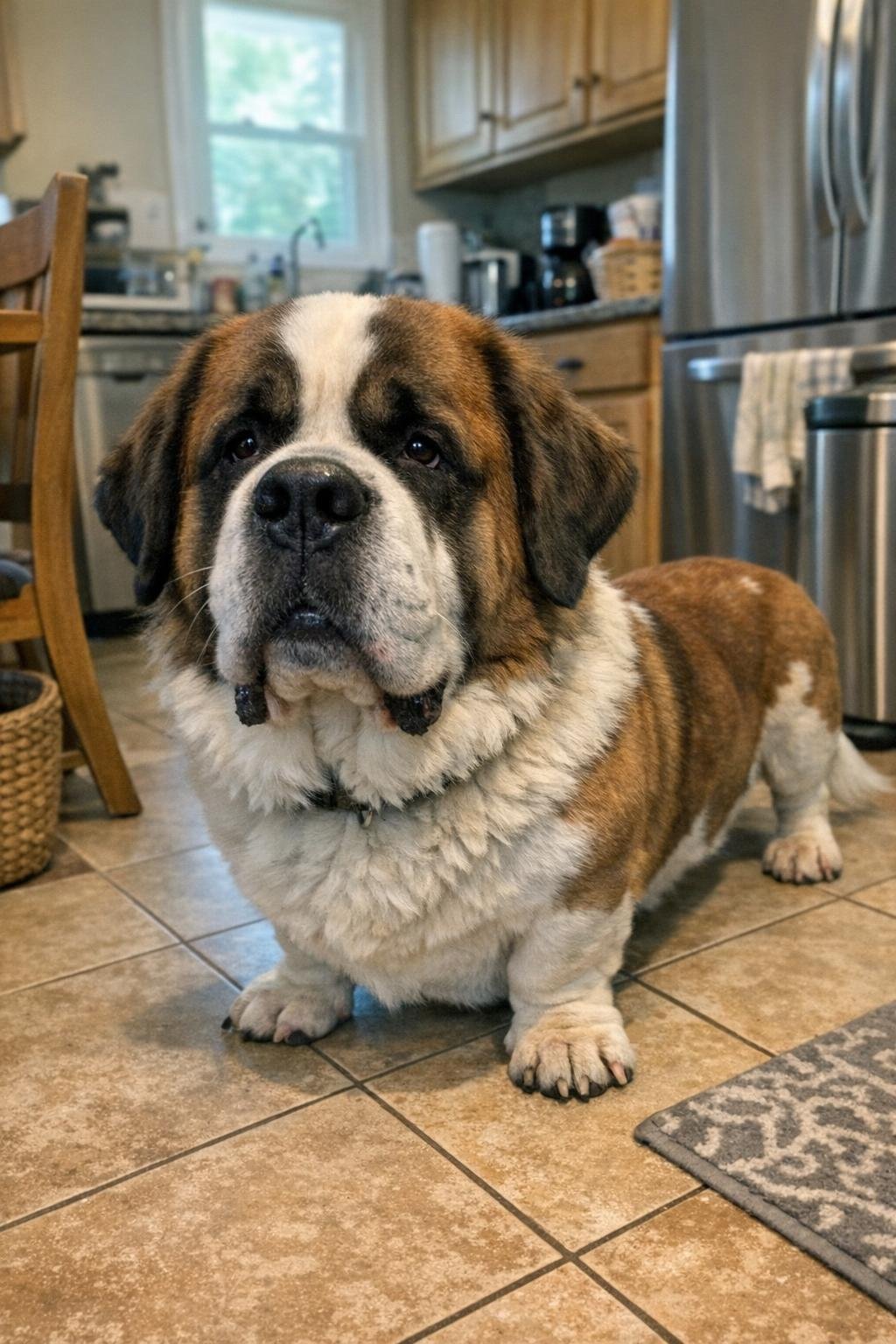
When my sister told me she was bringing home a “Basset Hound mix” from the shelter, I pictured the usual suspects: maybe a little Beagle, maybe some Lab, maybe one of those mystery combinations where everybody just shrugs and says, “hound-ish.” I definitely did not expect to walk into her kitchen after work, set my tote bag down, and laugh so hard I had to grab the counter. This dog looked like someone had carefully attached the front half of a giant mountain dog to the legs of a low-slung scent hound and then added the sweetest expression imaginable.
And the funny thing is, once the initial surprise wore off, the clues started popping out everywhere. The droopy eyes, the big blocky paws, the heavy chest, the soft, mournful Basset face, the fluffy neck ruff that had no business being on a dog that close to the ground—it all pointed in one gloriously odd direction. If you love shelter-dog mysteries as much as I do, you’ll probably see it too the second you look at him.
Here he is:
1. My first guess: Saint Bernard, and I felt weirdly confident about it
The moment I saw him, my brain went straight to Saint Bernard. Not purebred, obviously, but strongly, unmistakably Saint Bernard in the head and upper body. He had that broad skull, the substantial muzzle, the droopy lower lids, and the kind of fluffy, oversized neck that makes a dog look like he should be carrying a little brandy barrel in an old cartoon.
What made me so sure was the scale mismatch. His head looked about 30 percent too large for his frame, and his front end was deep and heavy while his legs were short and curved. Basset Hounds are famous for that low build, but they do not usually come with that giant alpine-rescue-dog expression. Put those features together and the “other half” starts looking pretty clear.
2. The head shape is doing most of the talking
When people guess mixed breeds, they often focus on coat color first, but I always look at head shape. In this case, the head is the giveaway. A Saint Bernard-type head tends to be wide across the top, with a pronounced stop between the forehead and muzzle and a softer, heavier face overall. Basset Hounds also have a distinctive face, but theirs is usually narrower and more elongated in a different way.
This dog’s face looked plush and substantial, with loose skin around the cheeks and a very full muzzle. If I had to describe it in plain kitchen-table terms, I’d say his face belonged on a 120- to 150-pound dog, while his legs belonged on a 45- to 65-pound dog. That kind of contrast is exactly what makes these shelter surprises so memorable.
3. Those tiny bent legs absolutely scream Basset
The Basset half was not exactly subtle. Short forelegs with a slight outward turn, a long body carried close to the floor, and that slow, deliberate little trot are classic Basset Hound traits. Bassets have a form of dwarfism called chondrodysplasia that gives them their signature build, and when that trait shows up strongly in a mix, it can completely change the silhouette.
My sister said the shelter paperwork listed him at 54 pounds, which honestly felt believable once he stood still. He looked dense, though—solid through the chest and shoulders. If he were Saint Bernard mixed with a taller breed, he might have ended up huge. The Basset structure seemed to “shrink” the package vertically while keeping a lot of heft up top.
4. Coat texture can offer another clue
One of the things that made me lean Saint Bernard instead of, say, Bloodhound or Great Pyrenees was the coat. He had medium-length fluff around the ears, neck, and shoulders, not a sleek hound coat. It wasn’t a full long-haired mountain-dog coat either, but it had enough thickness to suggest a heavier-coated parent.
Saint Bernards can have either short or longer coats, and both can contribute that slightly tousled, insulated look. A Basset’s coat is typically short, smooth, and dense. In a mix, you can end up with something in between: not truly shaggy, but definitely fuller than a standard hound coat. That’s exactly how he looked standing there on the kitchen floor, like he’d borrowed winter gear from a much bigger dog.
5. The coloring may or may not help, but the pattern often nudges the guess
Color alone is never enough for a breed ID, especially in shelter dogs, but it can support the rest of the evidence. Saint Bernards are often white with red, brown, or brindle patches, plus darker shading around the face. Bassets come in plenty of hound colors too, including tricolor and lemon-white patterns.
If a dog has a white chest, darker mask, warm brown patches, and that big, soft-eyed expression, people naturally start thinking Saint Bernard. Even if the markings aren’t textbook, the combination of color plus coat plus head shape can push the guess from “maybe” to “I’d bet lunch on it.” That was my feeling here.
6. His personality fit the theory more than I expected
I know behavior is not a perfect breed test, but it can be surprisingly telling. This dog was gentle, slightly stubborn, affectionate, and hilariously unhurried. He greeted me, accepted a few ear rubs, wandered over to the water bowl, and then parked himself in the middle of the kitchen like a piece of furniture nobody wanted to move.
That blend actually makes sense. Basset Hounds are famously independent, scent-driven, and low to the ground in every possible sense, including pace. Saint Bernards are often calm, sweet, and steady. Put those together and you get a dog who may not win agility competitions, but will absolutely win over every visitor in under 5 minutes.
7. Life with a Saint Bernard-Basset mix is probably a little extra in every category
If this guess is right, my sister is in for a dog with some very specific maintenance needs. First: drool. Maybe not full Saint Bernard flood levels, but enough that I’d keep a towel by the water bowl. Second: shedding. A coat with any Saint Bernard thickness can leave fur on dark leggings, couch cushions, car seats, and basically every black knit item you own.
Then there’s body management. A low dog with a heavy front end may need careful attention to weight, stairs, and jumping. Extra pounds on short legs and a long back can create wear and tear over time. For a dog in the 50- to 80-pound range with Basset-style structure, even gaining 5 to 8 unnecessary pounds can matter more than people realize.
8. Feeding a build like this takes more thought than people think
Whenever my family adopts a dog, food becomes the first practical discussion. For a mixed dog with this kind of sturdy body and short legs, staying lean is not cosmetic—it’s protective. A dog around 55 to 70 pounds might need somewhere in the range of 1,100 to 1,600 calories a day depending on age, activity level, and metabolism, but that number should come from a veterinarian’s guidance, not just the bag.
I’d also be careful with treats. It is so easy to hand out extras when a dog has a face like this. Even two medium biscuits a day can add up over a week. My own rule for busy weekdays is to pre-portion treats into a small container so I don’t absentmindedly overdo it while answering emails or cleaning up dinner.
9. Joint care would be high on my checklist
If I were in my sister’s shoes, I’d ask the vet about hips, elbows, back health, and overall joint support at the first appointment. Saint Bernards are a giant breed with known orthopedic concerns, and Bassets can also deal with joint and spine issues because of their structure. A mix doesn’t automatically inherit all the problems, but it does justify paying attention early.
That might mean using rugs on slick floors, keeping nails trimmed every 3 to 5 weeks, limiting repeated couch leaps, and choosing a supportive bed thick enough to cushion shoulders and hips. Even a simple foam bed that’s 4 to 6 inches thick can make a visible difference for a heavier, lower-built dog.
10. Grooming would probably land in the “manageable but constant” category
I don’t think this is the kind of dog who needs fancy salon-level styling, but he probably does need consistency. A good slicker brush 2 to 3 times a week, a deshedding comb during seasonal shedding, regular ear checks, and quick wipe-downs after meals would be my baseline. Basset ears especially can trap moisture, and any droopy-eared mix deserves routine ear monitoring.
And if he inherited Saint Bernard mouth habits, I’d also keep washable dish towels in at least two rooms. I am only half joking. Some dogs don’t just drink water—they redistribute it across a 6-foot radius.
11. Shelter labels are educated guesses, not final answers
This is one reason I love stories like this. Shelters do an incredible job with the information they have, but breed labels are often visual estimates made under time pressure. A dog may come in as a “Basset Hound mix” because the Basset traits are undeniable and the other side is less obvious in a kennel setting.
Once the dog relaxes in a home, the full picture comes out. You notice posture, coat texture, movement, vocal style, and all those little traits that don’t show up on intake day. I’ve seen “Lab mixes” that were clearly not Labs and “terrier mixes” that looked like three other breeds before breakfast. It happens all the time.
12. A DNA test could confirm it, but the visual case is already pretty strong
If my sister decides to do a canine DNA test, I would be very curious to see the results. Most quality tests cost roughly $80 to $150 depending on the brand and sale timing, and they can sometimes reveal a breed mix nobody expected. I’ve had friends learn their “shepherd mix” was actually part chow, part cattle dog, part boxer, with zero shepherd in sight.
But even without a test, I’d still say Saint Bernard is an excellent guess for the mystery half here. The giant head, fluffier coat, broad chest, and mellow expression all point that direction in a way that feels more convincing than a random stab in the dark.
13. What I’d call him besides adorable: a low-rider mountain dog
That is not a scientific term, obviously, but it fits. He has the soulful, low-slung comedy of a Basset and the oversized, cuddly presence of a Saint Bernard. It is one of those combinations that sounds improbable until you see it standing in front of you, nails clicking on the kitchen floor like, “Yes, this is my body and I’m doing great with it.”
Honestly, that’s part of the charm of mixed-breed dogs. They don’t always come in neat, predictable packages. Sometimes they come with giant heads, tiny legs, a ridiculous amount of personality, and a backstory that starts with one label and ends with your whole family saying, “Well… there is definitely some Saint Bernard in there.”
14. My final vote on the “other half”
If you asked me to put one breed on paper, I’d say the new kid is very likely a Saint Bernard-Basset Hound mix. Not because of one isolated feature, but because all the pieces line up together: the fluffy oversized head, the heavy front, the gentle giant expression, and the unmistakable Basset chassis underneath.
And truly, whatever the DNA says, he already hit the most important mark. He came home, made everybody smile within seconds, and somehow looks both enormous and tiny at the same time. In my book, that’s a pretty perfect new family member.