
 Dogs
 Cats
 Birds
 Horses
 On the Land
 In the Sea
I’ve lived with dogs long enough to know that some of their sweetest habits can also leave us wondering what on earth they mean. One of the most common is that gentle, heavy little weight of a head laid right across your slipper, sock, or bare foot while you’re standing at the kitchen counter or settling into your favorite chair. It looks affectionate, and often it is, but in my experience there’s usually a bit more going on.
For those of us who pay close attention to every sigh, stretch, and stare from our older companions, this behavior can tell us quite a lot. From comfort and bonding to aches, anxiety, and simple habit, here are 8 surprising reasons why your dog rests their head on your feet—and what I’d watch for at home.
1. They feel safest when they’re touching you
Many dogs use physical contact the way we might use a warm blanket. Resting their head on your feet gives them a clear point of contact, and because your feet stay relatively still, they make an easy “anchor.” I’ve seen this most often in the evening, when the house finally quiets down and a dog chooses one spot for 20 to 40 minutes at a time without shifting much.
If your dog does this when guests arrive, during thunderstorms, or when the vacuum comes out, safety is likely the message. A dog that settles more deeply after placing their chin on your foot, lets out a long breath, or closes their eyes is usually saying, “I’m calmer because you’re here.”
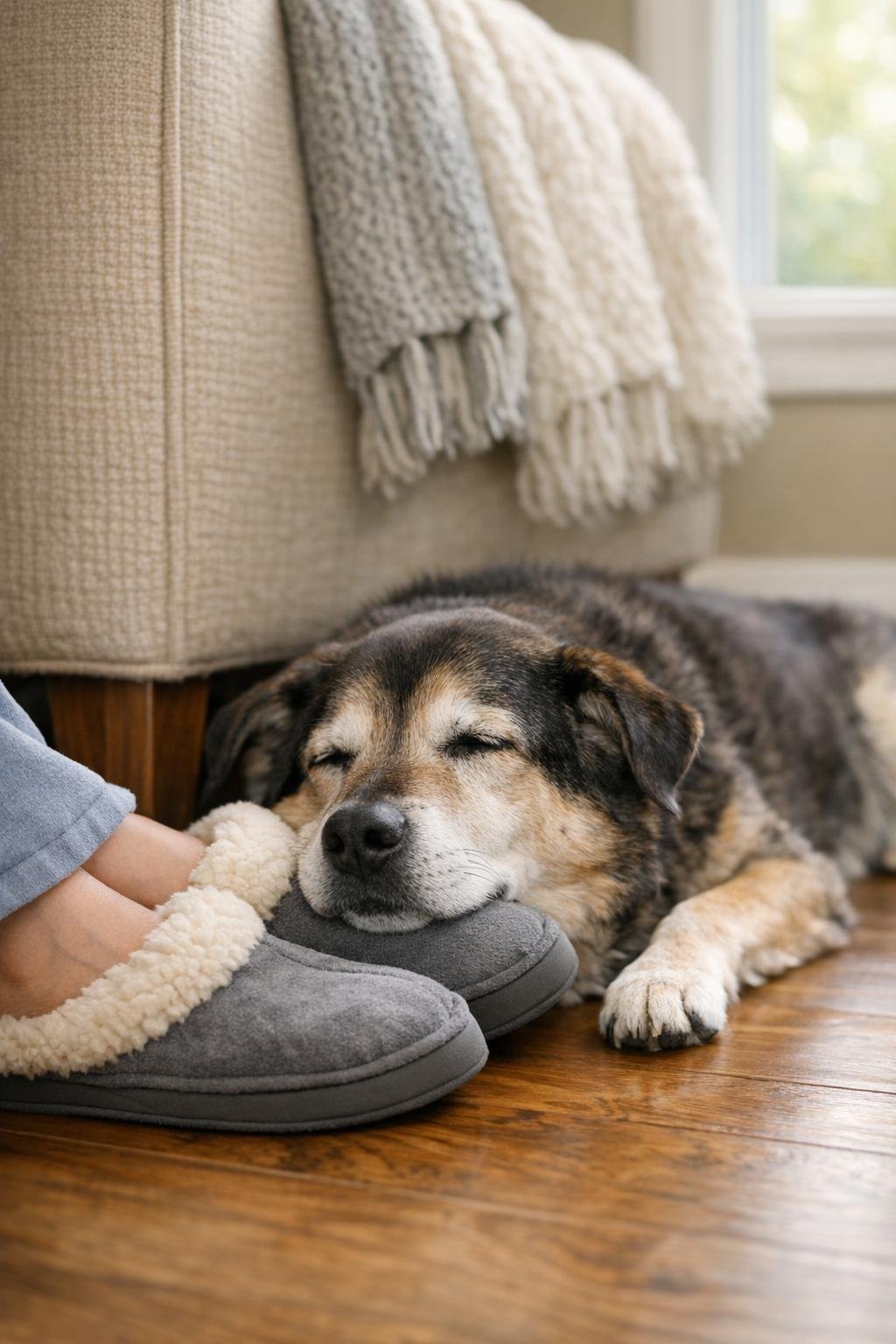
2. They’re claiming a little pocket of your attention
Some dogs discover that putting their head on your feet gets results faster than barking, pawing, or pacing. It’s quiet, polite, and very hard to ignore. If your dog does this right around 5:00 p.m., when you usually feed dinner, or 15 minutes before the usual walk, they may be gently nudging you toward the next item on the schedule.
I especially notice this in dogs that follow a dependable routine. They learn that foot contact often leads to eye contact, a kind word, a scratch behind the ears, or movement toward the leash hook. In that case, the head-on-feet behavior is part affection and part very successful communication.
3. Your feet carry your strongest familiar scent
Dogs experience the world through smell first, and our feet are full of concentrated personal scent. Socks, slippers, and the inside of shoes hold onto that scent especially well, which is one reason some dogs steal laundry and another reason they settle right on top of your feet. To your dog, that spot is rich with information and comfort all at once.
This can be especially true if you’ve been out of the house for a few hours. A dog may greet you, circle once, then lie down with their head across your shoe as if to “check in” through scent. It may look funny, but it’s often one of the simplest ways they reconnect after separation.
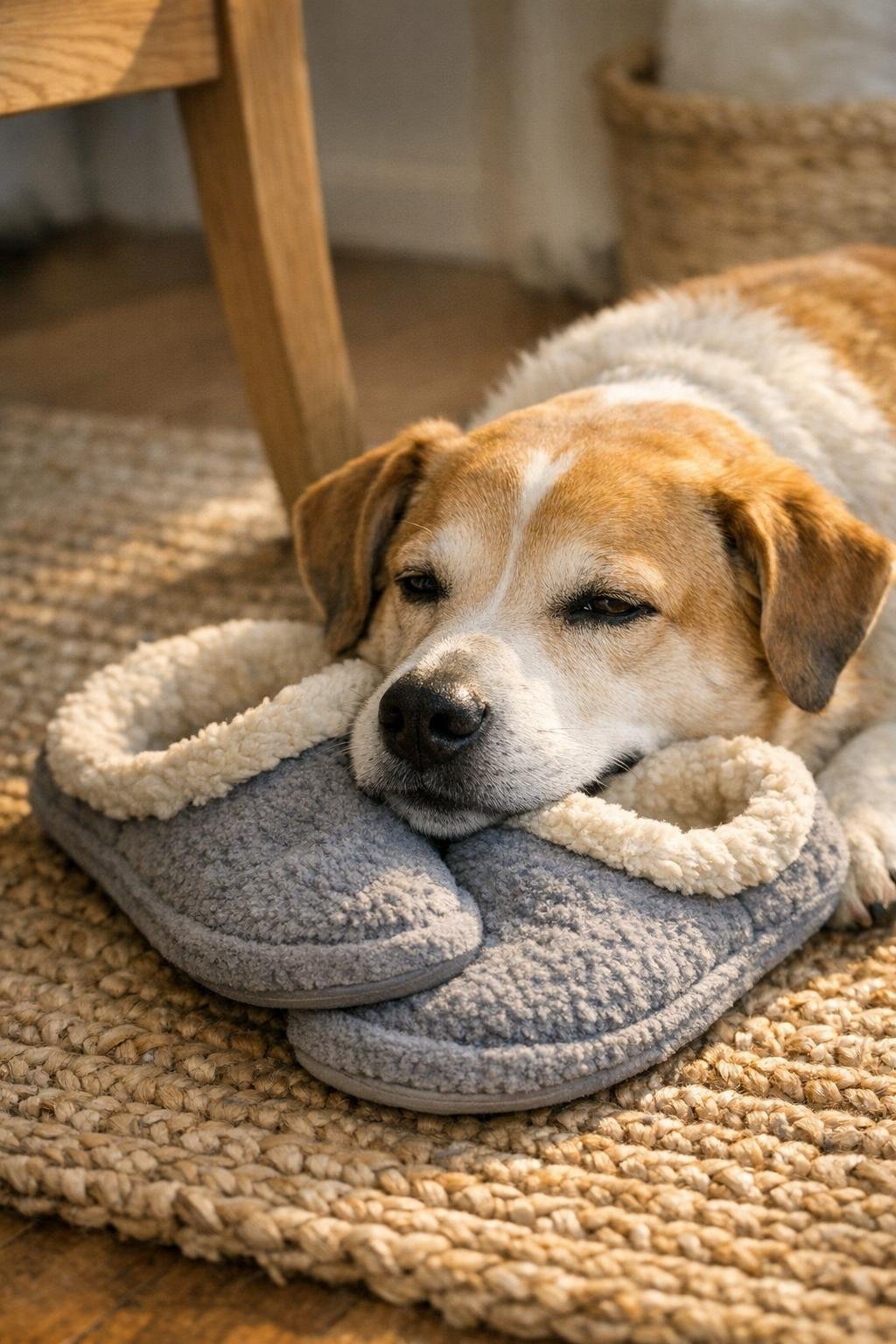
4. They may be trying to keep tabs on your movement
Older dogs, and especially dogs that have grown more attached with age, sometimes like to know exactly where we are. A head on your foot gives them instant notice if you stand up, shift direction, or step away. It’s a wonderfully efficient system: if your foot moves even 2 or 3 inches, they know about it immediately.
I’ve seen this in dogs who don’t want to miss anything—whether that’s a trip to the kitchen, a move to the porch, or bedtime. If your dog startles awake the moment you adjust your feet or follows you from room to room all day, this behavior may be less about cuddling and more about staying connected to your every move.
5. They’re showing quiet affection instead of exuberant affection
Not every loving dog is a face-licker or lap-climber. Some are gentle, reserved souls who express attachment in softer ways. A chin on your feet can be the canine equivalent of sitting shoulder to shoulder on the sofa—close, warm, and steady without demanding much.
This is common in mellow adults and seniors who prefer calm contact over excitement. If the rest of your dog’s body looks loose, their ears are neutral, and they simply stay there for 10, 20, or 30 peaceful minutes, I’d read it as one of the sweetest forms of trust: “I love being near you, and this is enough.”
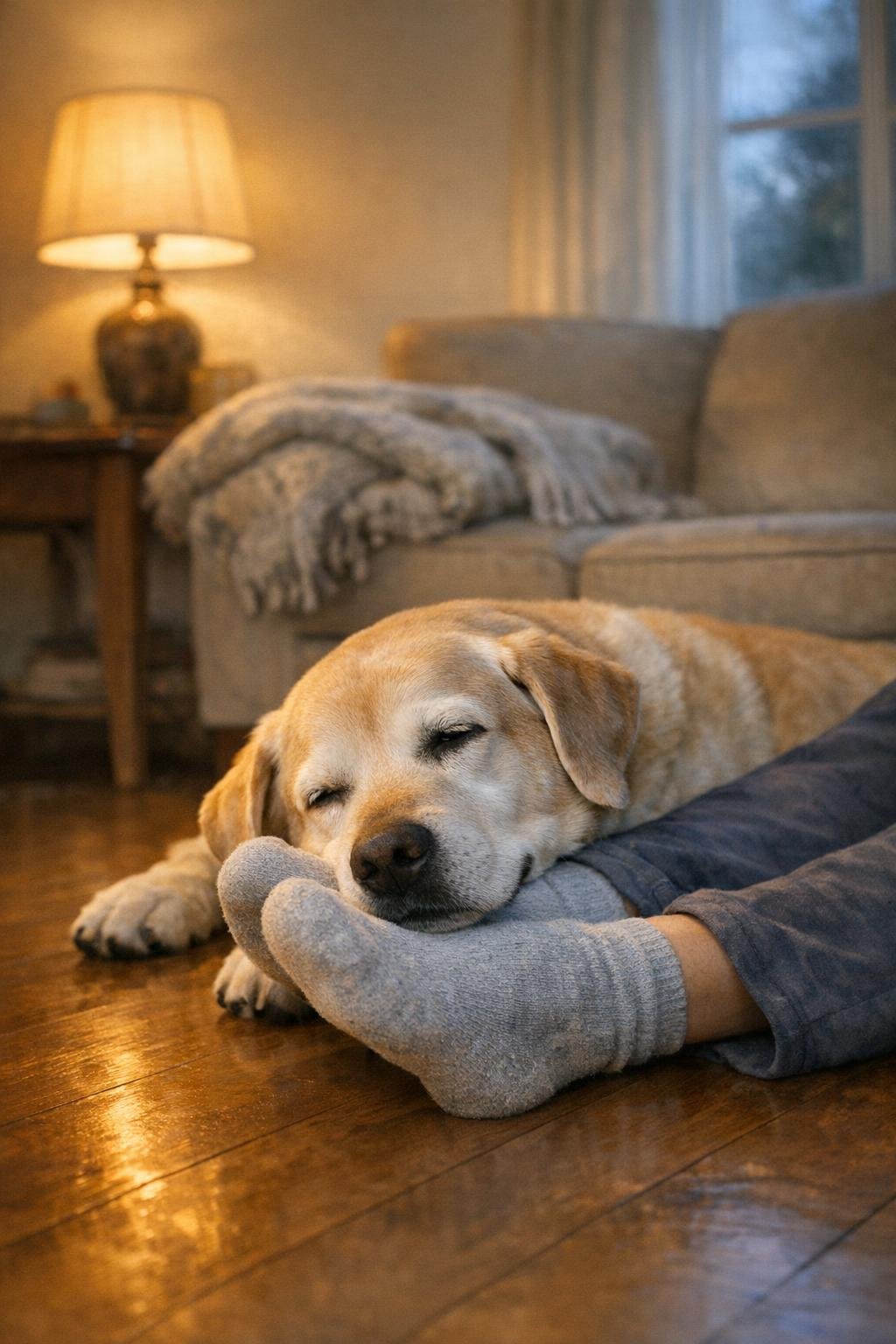
6. They could be seeking warmth or pressure for comfort
Feet radiate warmth, and for a dog with a lean body, thinning coat, or aging joints, that warmth can be surprisingly appealing. Add the slight pressure of resting their jaw on something stable, and it can become a very soothing position. I notice this more in cooler months, especially on tile or hardwood floors where dogs seem to search for the warmest available spot.
If your dog is 8 years or older, has mild arthritis, or hesitates before lying down, pay attention to whether this behavior increases on cold mornings or after a long walk. Gentle pressure and body heat may simply help them settle. A supportive bed that’s at least 3 to 4 inches thick can help too, especially for medium and large dogs.
7. Mild anxiety or age-related confusion may be part of it
In some senior dogs, increased clinginess can come with vision changes, hearing loss, or age-related cognitive decline. A dog who once napped across the room may begin choosing direct physical contact because it helps them stay oriented. Your feet become a reliable landmark they can find in seconds, even in dim light or a busy house.
If this behavior appears suddenly and comes with pacing, restless nights, staring into corners, or seeming lost in familiar rooms, I’d mention it to your veterinarian. Keep notes for 7 to 10 days: what time it happens, how long it lasts, and what else you notice. That kind of pattern can be very helpful during an appointment.
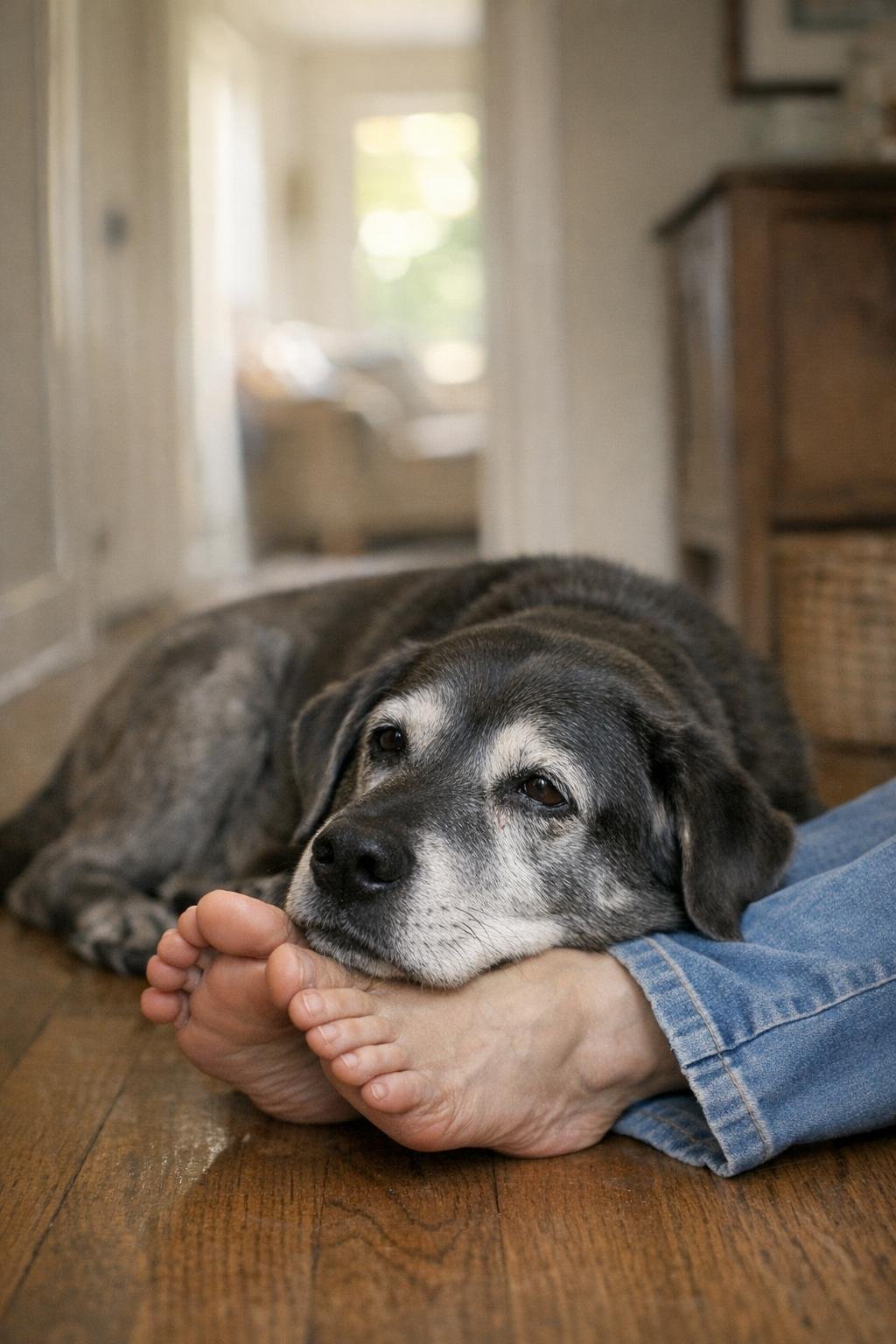
8. Occasionally, they’re trying to tell you they don’t feel quite right
When dogs feel unwell, they often become either more withdrawn or more attached. Resting their head on your feet can be a quiet way of seeking reassurance when they have stomach upset, soreness, fatigue, or general discomfort. If your dog suddenly starts doing this far more often—say, several times a day when they never used to—it’s worth looking at the bigger picture.
Watch for concrete signs such as reduced appetite for 24 hours, drinking much more or less than usual, limping, panting at rest, reluctance to use stairs, or difficulty settling. A new clingy behavior by itself may be harmless, but paired with physical changes, it can be your dog’s subtle way of asking for help.
Most of the time, a dog resting their head on your feet is a tender little sign of trust, comfort, and connection. Still, because our dogs speak through habits more than words, it’s worth noticing when the behavior happens, how often, and what else changes around it—especially with an older companion I know we’re all watching with extra love.