
 Dogs
 Cats
 Birds
 Horses
 On the Land
 In the Sea
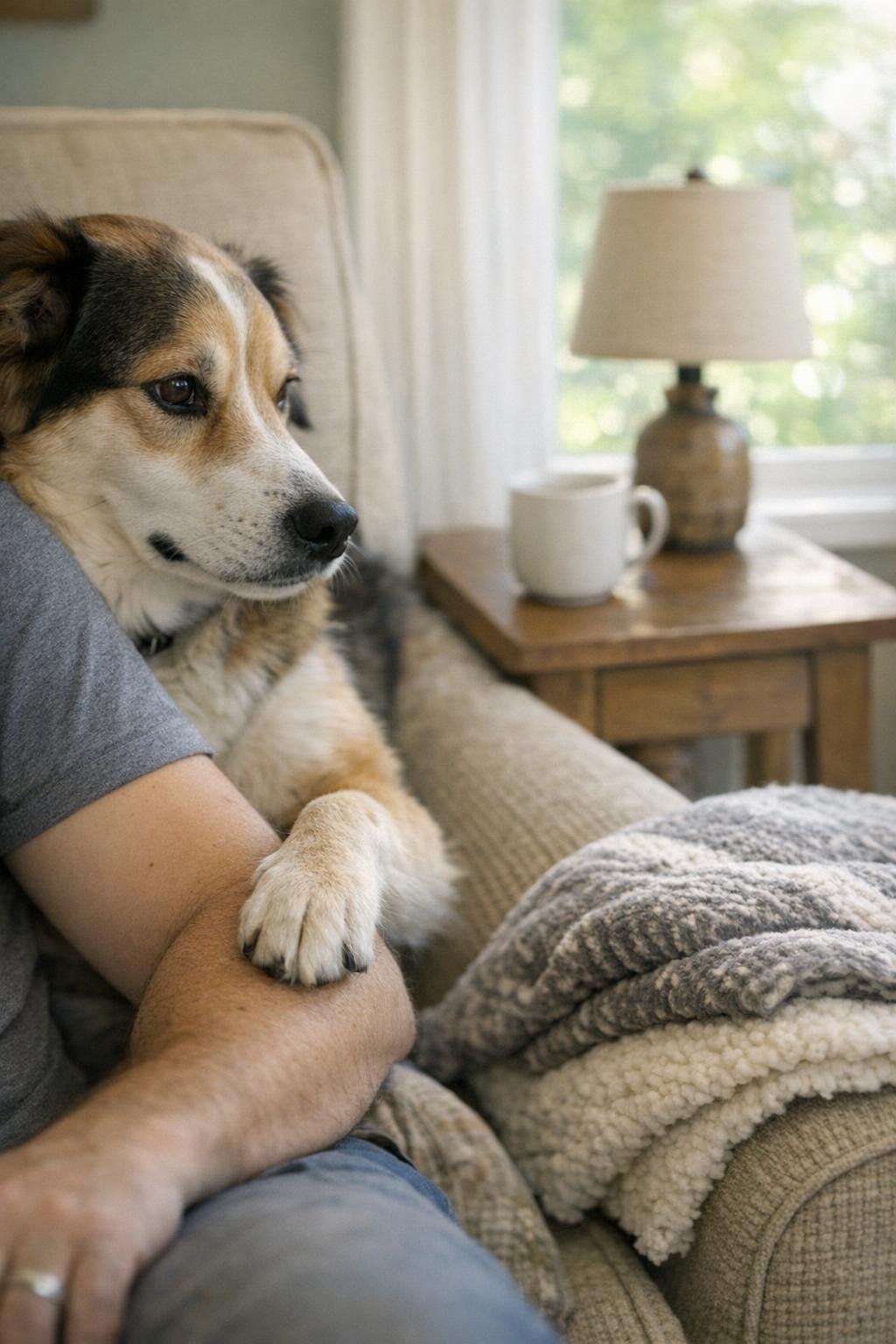
I’ve lived with dogs long enough to know that a paw on the arm can stop you in your tracks. One moment you’re reading in your favorite chair or stirring soup at the counter, and the next your dog is reaching out with that quiet, deliberate touch. It feels sweet, but it can also leave you wondering what on earth they’re trying to say.
In my experience, that little gesture is rarely random. Dogs use their paws the way we use a hand on a shoulder, and the meaning often depends on timing, posture, and what happened in the few minutes before. Here are 9 surprising reasons your dog may be putting their paw on your arm, especially if you share your home with an older, deeply bonded companion.
1. They’re asking for your full attention
Sometimes a paw is simply your dog’s version of “excuse me.” If you’ve been on the phone for 10 minutes, reading the mail, or talking to a visitor, your dog may lay one paw across your forearm to interrupt politely. I’ve seen this most often when eye contact alone isn’t working and the dog wants to make sure the message lands.
Watch for a soft face, relaxed ears, and a calm stance close to your chair or knee. If the paw comes with steady staring and no whining, your dog may just be saying, “Please notice me now.” It’s a very social behavior, especially in dogs who are used to regular one-on-one time each day.
2. They’ve learned it gets results
Dogs are excellent students when it comes to cause and effect. If putting a paw on your arm has led to petting, a treat, being lifted onto the sofa, or a quick trip outside even 3 or 4 times, many dogs will repeat it. To them, it’s an efficient tool that has worked before.
I tell people to think back over the last week. Did you respond faster to the paw than to pacing, sitting by the door, or quiet staring? If so, your dog may have trained you a bit. It’s not manipulation in a nasty sense; it’s just smart pattern recognition from an animal who knows what earns a response.
3. They want physical reassurance
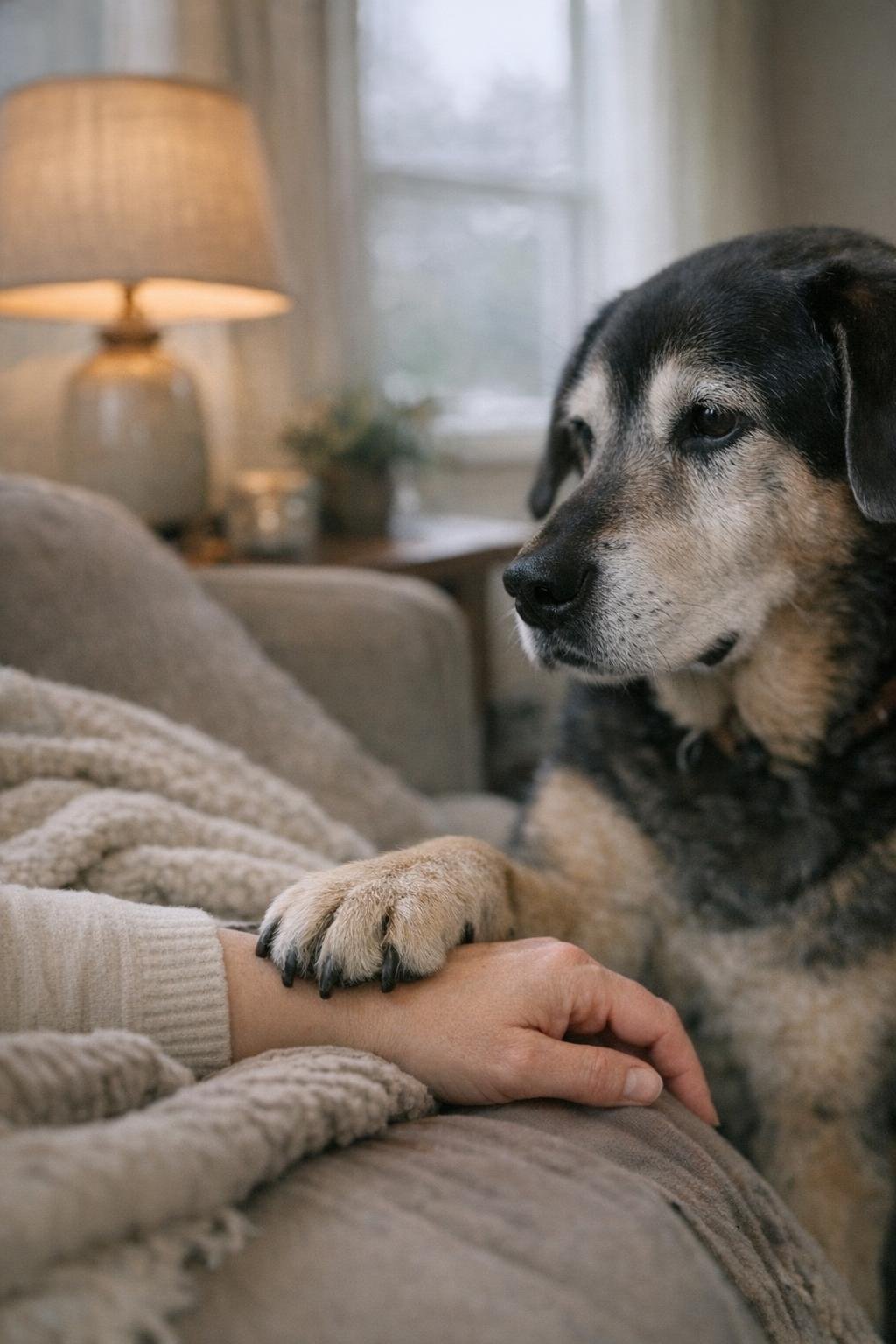
Some dogs use a paw the way a child might touch a parent’s sleeve in an unfamiliar room. If there’s a thunderstorm, a visiting repair person, or even an unusual noise from the dishwasher, your dog may reach for your arm to check in. That brief contact can help them settle.
This is especially common in senior dogs or naturally sensitive dogs who have become more clingy with age. A paw paired with leaning, trembling, or following you from room to room suggests your dog is looking for comfort, not demanding entertainment. In those moments, your calm voice and 30 to 60 seconds of gentle stroking can go a long way.
4. They’re reminding you it’s time for something important
Dogs notice the clock in their own way. If dinner usually happens at 5:30, the evening walk starts at 7:00, or medication is wrapped in cheese at 8:00, your dog may use a paw as a practical reminder. I’ve known dogs who were more reliable than the kitchen timer when it came to routine.
Look at the pattern. If the pawing happens within the same 15- to 20-minute window each day, it’s probably tied to a schedule rather than emotion. Older owners often keep wonderfully steady routines, and dogs absolutely learn them down to the minute.
5. They’re trying to start affection on their terms
Not every paw means “I need something practical.” Sometimes it means “love on me a bit.” Many bonded dogs initiate touch by placing a paw lightly on your sleeve, then waiting to see if you’ll scratch the chest, rub the ears, or pat the shoulder. It’s a tender little social ritual.
I’ve noticed this often in quiet evening hours, especially when a dog is already resting beside me and simply wants the connection to continue. If the body is loose, the eyes are soft, and the paw stays in place without scratching, your dog may be inviting a gentle exchange rather than making a demand.
6. They may be feeling a little insecure as they age
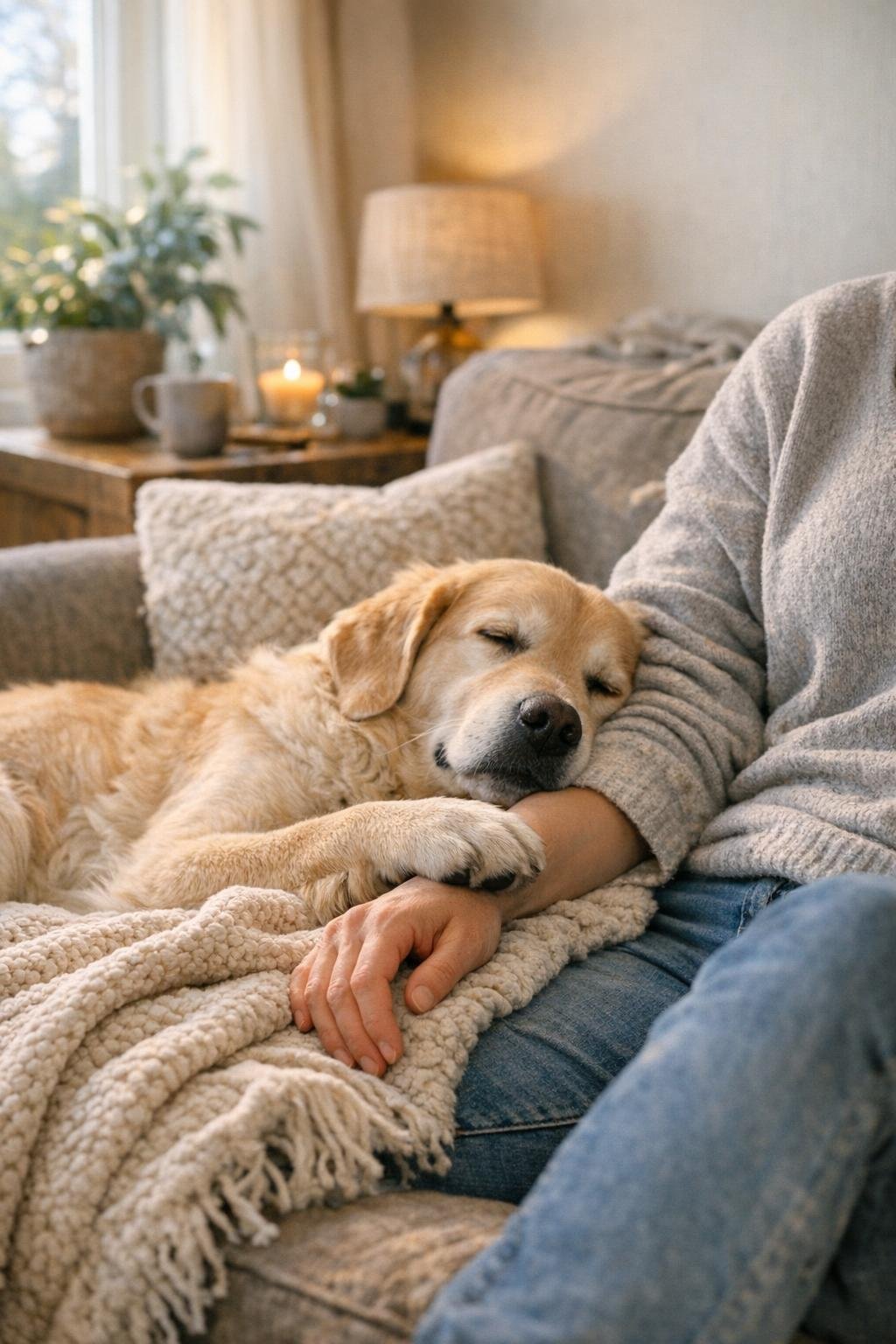
Older dogs can become more physically or mentally uncertain. Changes in hearing, vision, balance, or mild cognitive decline may make them seek extra contact, particularly in the evening or when moving from one room to another. A paw on your arm can be a grounding behavior, a way to confirm that you’re there.
If this gesture has increased over the last 2 to 6 months and your dog also seems more restless at dusk, startles more easily, or hesitates on stairs, it’s worth paying attention. The paw itself isn’t a diagnosis, of course, but it can be part of a bigger picture that deserves a veterinary conversation.
7. They need help with something uncomfortable
A paw can also be a request for assistance. Your dog may need the door opened, the water bowl refilled, the blanket moved, or help getting up from a slippery floor. In some cases, they may be trying to draw your attention to discomfort such as itchy skin, sore joints, or an upset stomach.
This is where context matters. If the pawing is new and comes with licking at one spot, panting, reluctance to jump, or repeated trips to the back door within 30 minutes, don’t brush it off as cute. Dogs often communicate physical unease in indirect ways, and a sudden increase in pawing can be one of them.
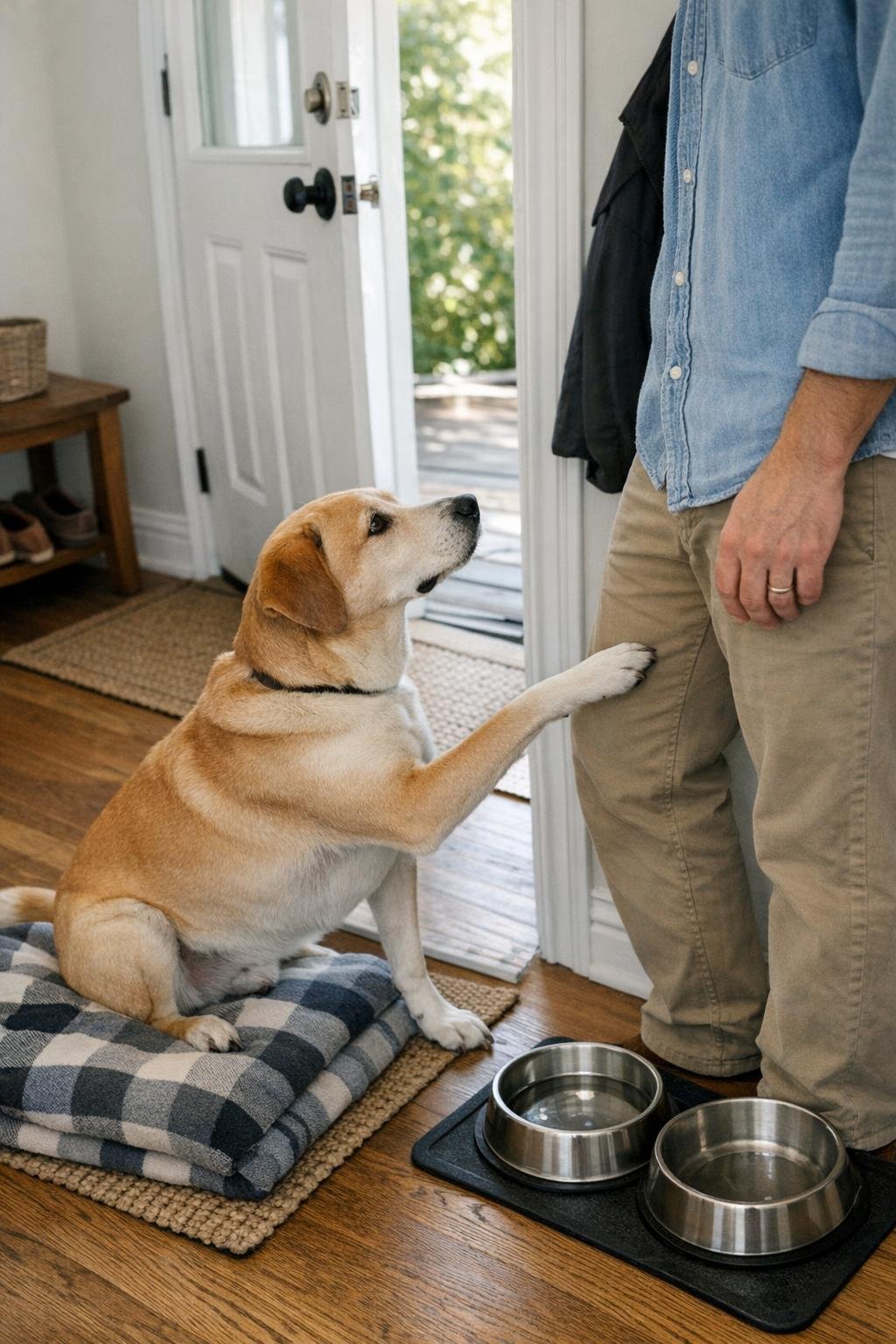
8. They’re gently asking you to stop what you’re doing
This surprises many people, but a paw can sometimes mean “that’s enough.” If you’re brushing too long, hugging too tightly, trimming nails, or scratching a sore spot, your dog may place a paw on your arm as a calming, interrupting signal. It can be polite resistance rather than a bid for more contact.
I’ve seen dogs do this during grooming sessions that ran past their patience limit by even 2 or 3 minutes. If the paw comes with lip licking, turning the head away, or a still body, take it seriously. Respecting these quieter signals helps prevent stress and builds trust over time.
9. They’re mirroring your bond and returning your touch
Dogs who live closely with us often copy our social habits. If you regularly stroke your dog’s shoulder, rest a hand on their chest, or speak to them in calm, affectionate moments, they may answer in kind with a paw on your arm. In a very real sense, they’re participating in a shared language you’ve built together.
To me, this is one of the loveliest explanations of all. When a dog softly touches you and then settles, they may not be asking for food, a walk, or rescue from distress. They may simply be saying, in the plainest way they know, “I’m here with you.”
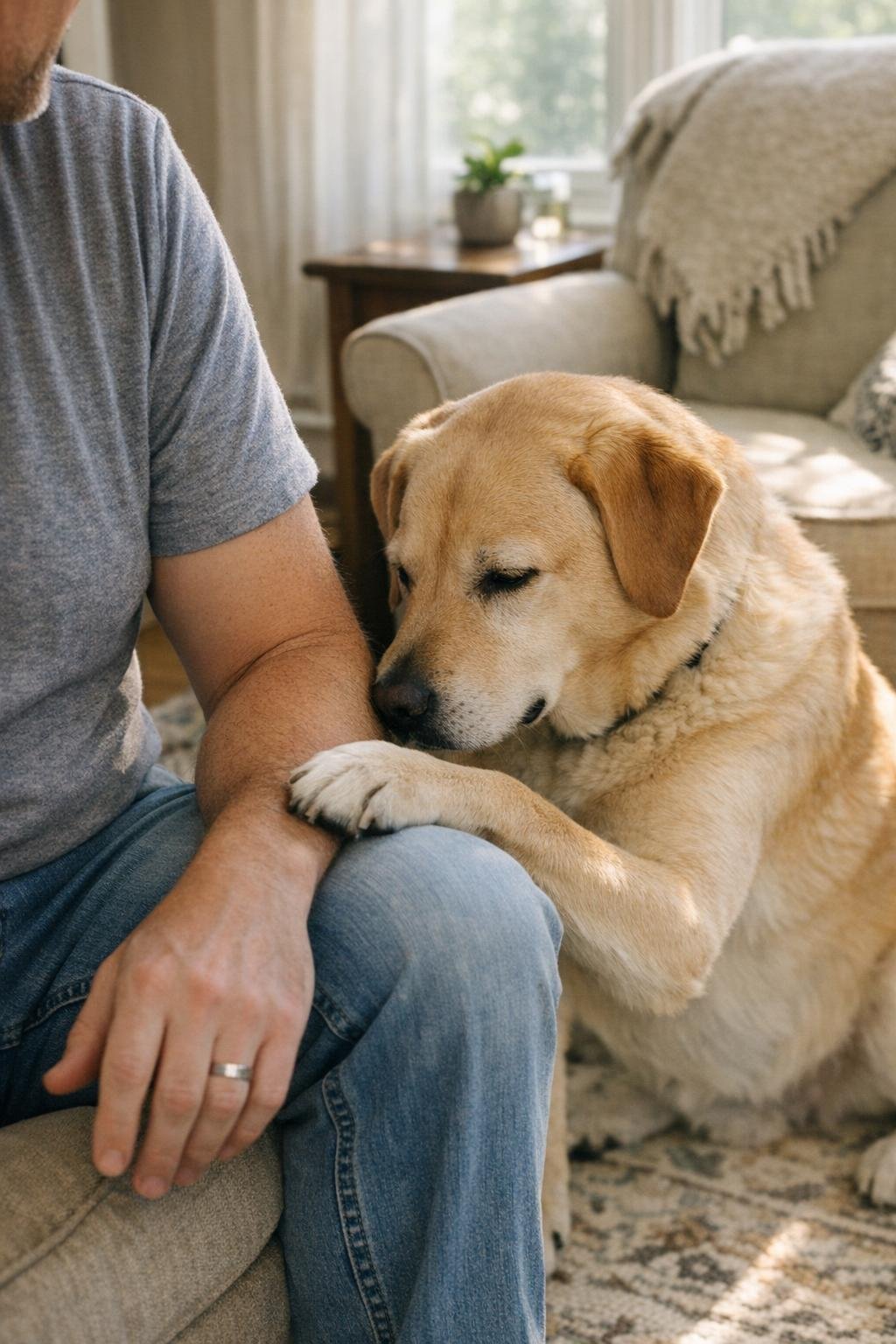
A paw on your arm can mean many things, but the answer is usually sitting right there in your dog’s body language and daily routine. The more closely you watch the moment around the gesture, the better you’ll understand whether your old friend wants attention, comfort, help, or simply a bit of love back.