
 Dogs
 Cats
 Birds
 Horses
 On the Land
 In the Sea
If you’ve lived with dogs long enough, you know a nose nudge can mean a dozen different things. Over the years, I’ve had dogs press a cool snout into my palm while I was chopping parsley, reading on the sofa, or tying my shoes to head out the door. It looks simple, but that little bump is often a very deliberate form of communication.
For devoted dog owners—especially those of us who’ve shared our homes with dogs through puppyhood, middle age, and the senior years—it helps to look at the context. A hand nudge can be affectionate, practical, insistent, or even a quiet sign that something feels off. Here are 8 surprising reasons your dog may be nudging your hand with their nose, and what I’ve learned to watch for.
1. They’re asking for physical reassurance
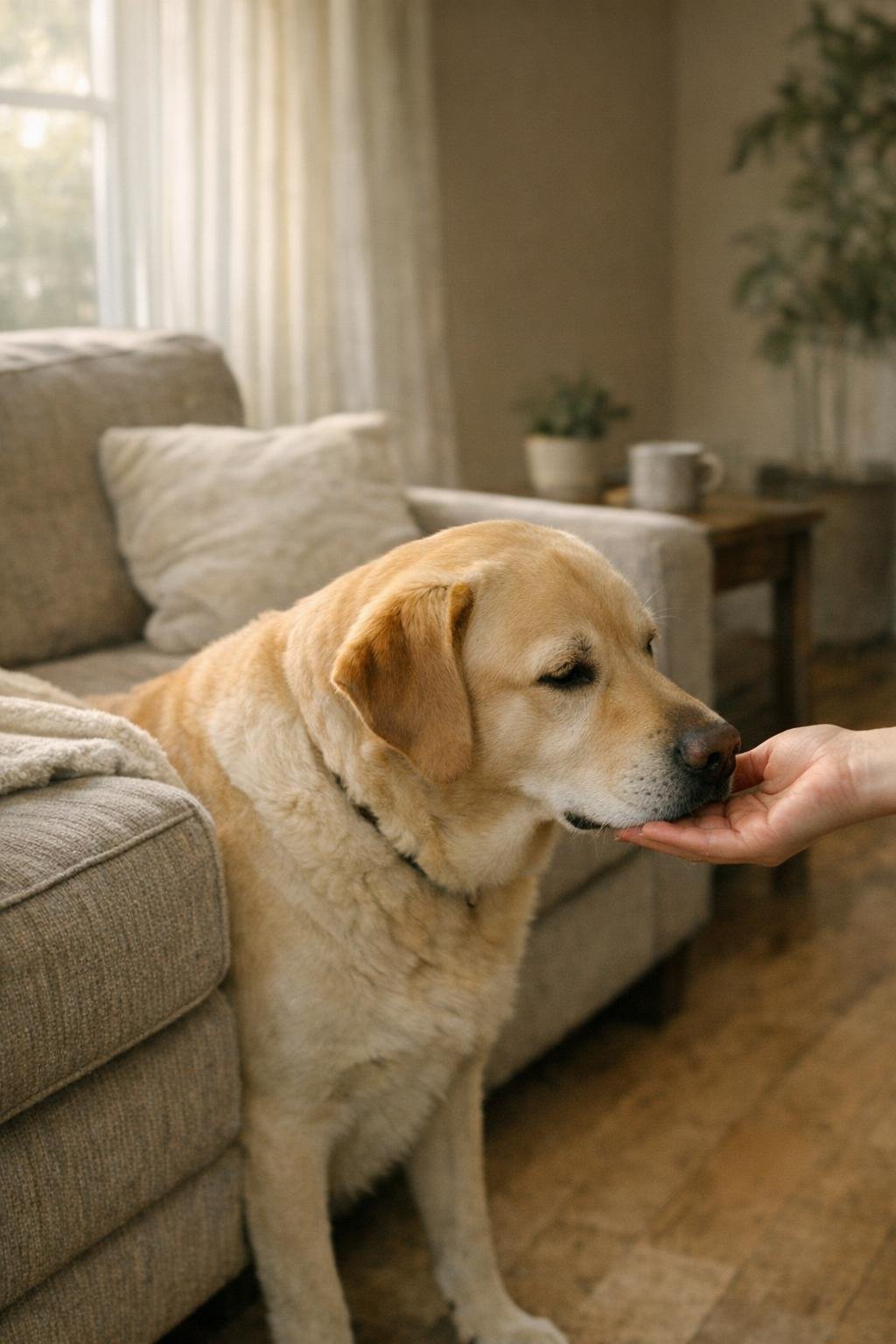
Many dogs nudge a hand because they want contact, not necessarily a full cuddle session. A gentle push under your palm often means, “Please keep petting me,” or “I’d like a little connection right now.” I see this most often during quiet parts of the day—early morning on the couch, or after dinner when the house settles down and the dog finally relaxes.
Older dogs in particular can become more tactile as their routines narrow. If your dog nudges and then leans into your hand, closes their eyes, or stays planted beside your knee for 30 seconds or more, that usually points to comfort-seeking affection rather than urgency. Slow strokes from the forehead to the shoulders for 1 to 2 minutes are often all they wanted.
2. They’ve learned that your hands make good things happen
Dogs are brilliant at pattern recognition. If your hand has delivered biscuits, clipped on a leash, opened the back door, or scratched the exact spot behind the ears a hundred times, your dog may nudge it simply because that body part is associated with results. In other words, they’re not being random—they’re using the tool that has worked before.
This is especially common in food-motivated dogs and in homes with reliable routines. If the nudge happens near 7 a.m., 5 p.m., or whenever you usually reach into the treat jar, your dog may be cueing the next step. I always tell people to notice location: by the pantry, near the leash hook, or next to the medicine drawer can tell you far more than the nudge itself.
3. They want you to follow them somewhere
One of the more interesting nudges is the “come with me” version. Your dog bumps your hand, takes two or three steps away, then looks back. That often means they’re trying to lead you to something specific: the water bowl is empty, the door needs opening, their blanket is tangled, or they hear something in another room.
Senior dogs do this a lot when they don’t want to bark or can’t move as comfortably as they once did. If the bowl has been sitting for several hours or the dog hasn’t gone out in 4 to 6 hours, a hand nudge followed by pacing is worth taking seriously. I’ve learned to stand up and follow first, then interpret later—it saves a lot of guesswork.
4. They’re checking in because something feels uncertain
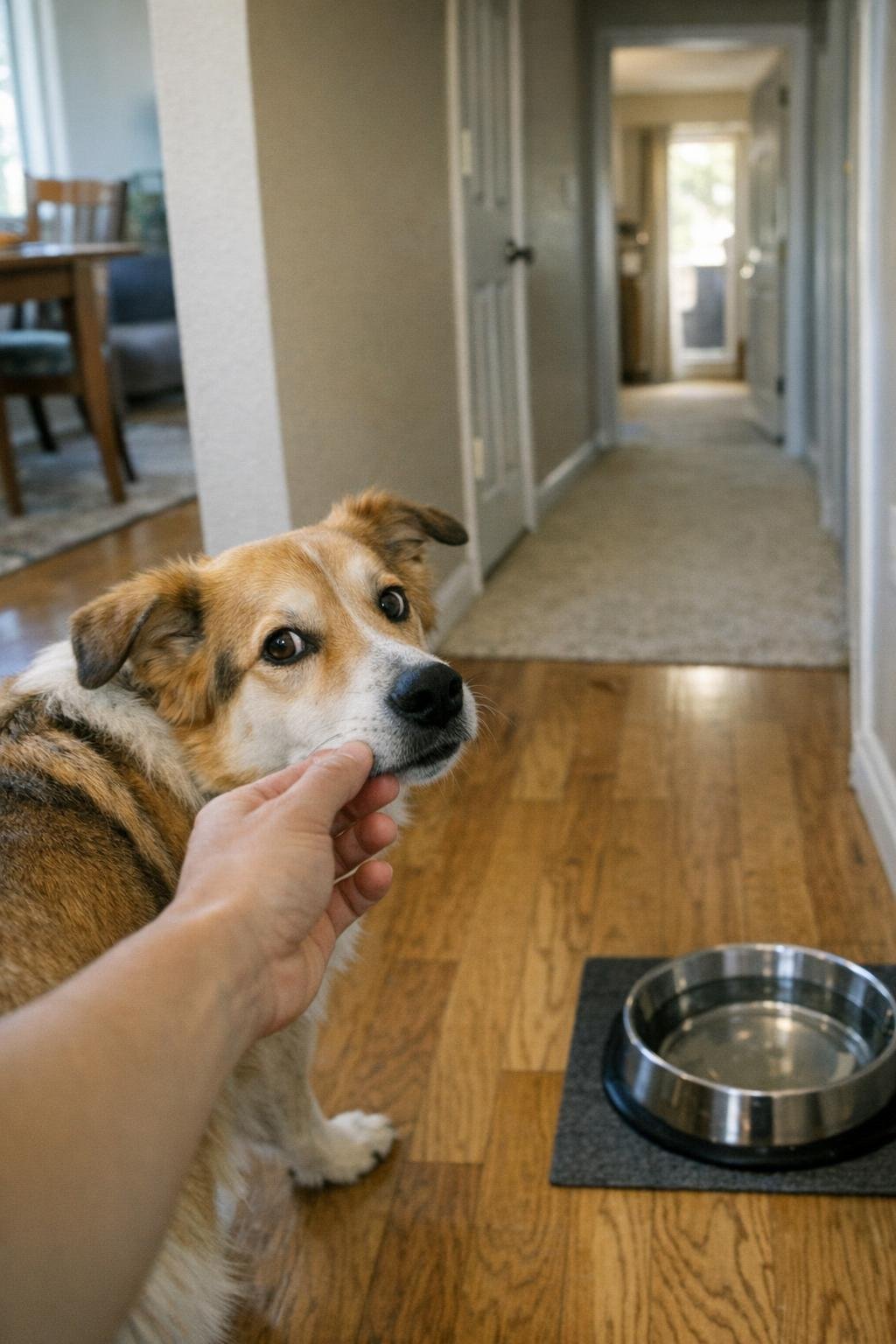
Dogs often use touch to gather information when they’re unsure. A new houseguest, a delivery at the door, thunder 2 miles away, or even furniture moved to a different spot can prompt a quick nose nudge. It’s their version of asking, “Are we all right?” especially if they’re already looking at you for cues.
I’ve seen this in steady, well-adjusted dogs as much as in nervous ones. Watch for paired signals such as ears slightly back, a still body, or following you from room to room. If the nudge comes during a stressful moment, calm verbal reassurance and a predictable routine—sit together for 5 minutes, close the curtains, turn on a fan for white noise—can help lower the dog’s tension.
5. They’re reminding you it’s mealtime or medication time
Dogs with strong internal clocks can be more punctual than any appliance in the house. If your dog gets breakfast at 6:30, a joint supplement at 8:00, and dinner at 5:30, you may get a very pointed nose nudge within 10 minutes of those times. For older dog owners managing pills, canned food, or special diets, this is a common and surprisingly organized behavior.
Context matters here too. A nudge paired with staring toward the kitchen, licking lips, or walking to the feeding area usually signals routine-related anticipation. If your senior dog is on medication for arthritis, thyroid issues, or heart conditions, keeping a written schedule on the fridge can help you tell the difference between a clever reminder and a new increase in hunger that deserves a call to the veterinarian.
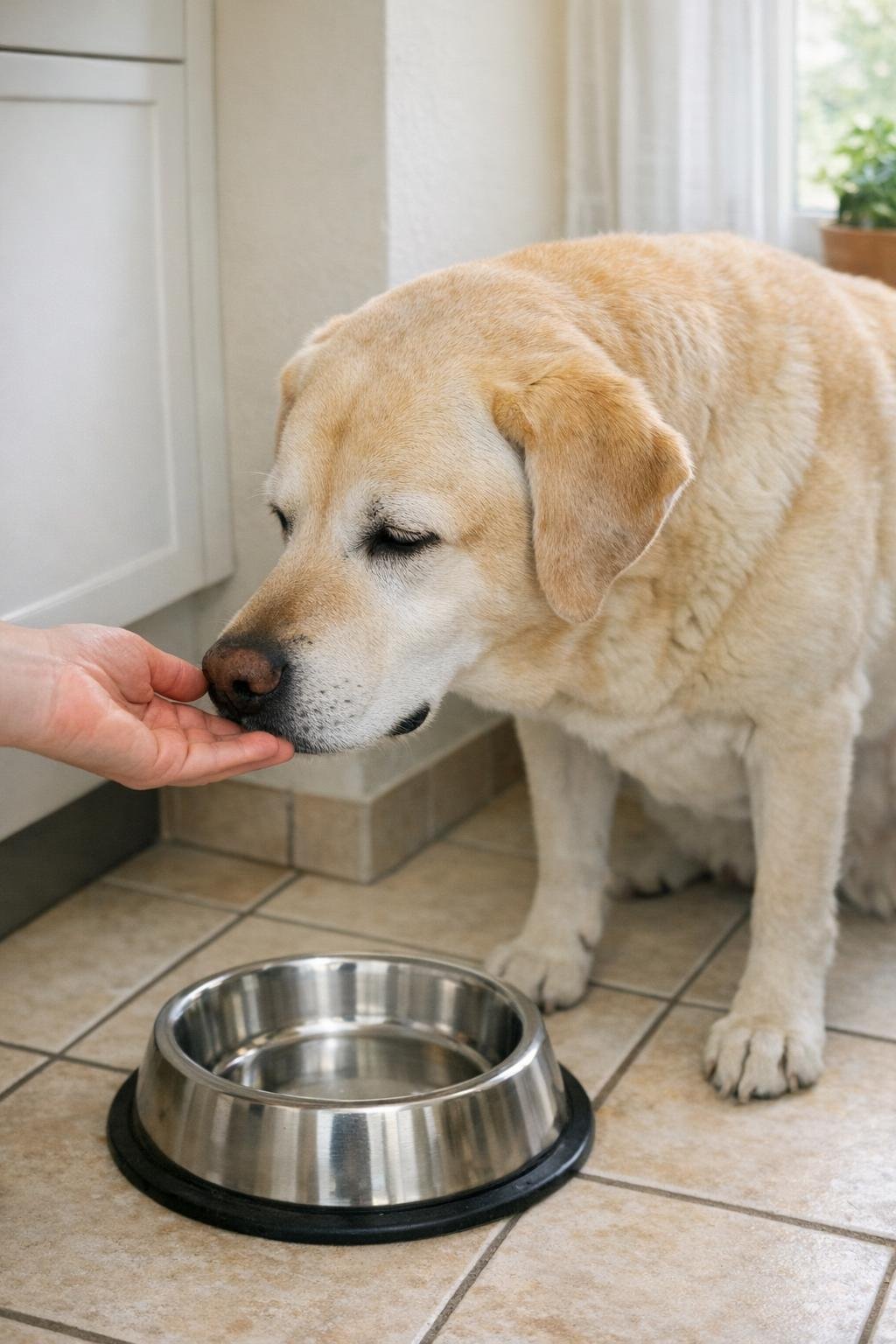
6. They may be trying to interrupt what you’re doing
Not every nudge is sweetly passive. Sometimes your dog is saying, “Enough of that—pay attention to me.” This often happens when you’ve been holding a phone, reading, typing, or talking to someone else for 15 to 20 minutes without acknowledging them. A nose to the hand is efficient and hard to ignore.
I don’t mean that negatively; it’s often a sign of a dog who wants engagement, movement, or a break in the routine. If the dog then brings a toy, heads to the door, or does a play bow, you’ve got your answer. A 10-minute sniff walk, a short game of “find it” with 6 to 8 treats, or even two minutes of focused petting can satisfy that social need beautifully.
7. They could be signaling discomfort or a need for help
This is the reason I never like to dismiss repeated nudging, especially in older dogs. If your dog keeps pressing your hand and seems restless, stiff, panting, or unable to settle, they may be trying to tell you they’re uncomfortable. Arthritis flare-ups, digestive upset, dental pain, or a sudden need to go outside can all show up first as clingy, persistent contact-seeking.
If the behavior is new, happens several times in an hour, or comes with changes in appetite, mobility, or sleep, I’d pay close attention. Check basics right away: fresh water, a potty break, room temperature around 68 to 72 degrees, and whether they can rise from their bed comfortably. For anything persistent or unusual, a veterinary call is the prudent next step.
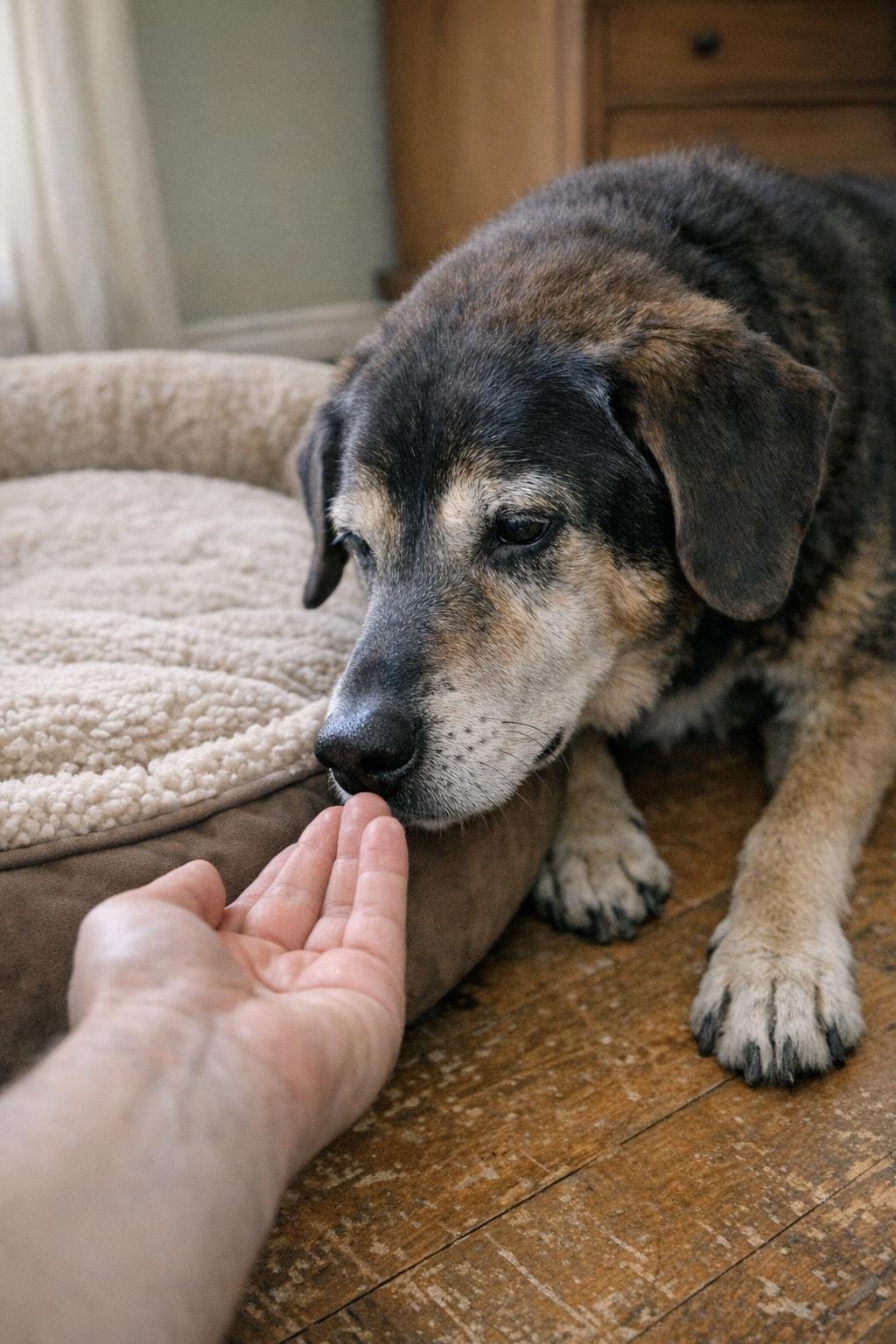
8. It’s their polite way of deepening a bond
Sometimes the surprising reason is the simplest one: your dog has developed a small ritual with you. Dogs are creatures of habit, and many create tiny private behaviors with their favorite people. A nose nudge before a walk, during your evening tea, or right before lights-out can become part of the relationship itself—a familiar gesture that says, “We do this together.”
I find this especially moving in longtime companions. After years of shared schedules, dogs often develop subtle customs that are every bit as meaningful as grand displays of affection. If the nudge is gentle, relaxed, and tied to everyday moments, it may not be a request at all. It may simply be your dog’s elegant little way of staying connected.
A nose nudge may look like a tiny gesture, but in a dog’s world it can carry real meaning. The best clue is always the full picture—time of day, body language, routine, and whether the behavior is familiar or brand new—because that’s where the message becomes clear.