
 Dogs
 Cats
 Birds
 Horses
 On the Land
 In the Sea
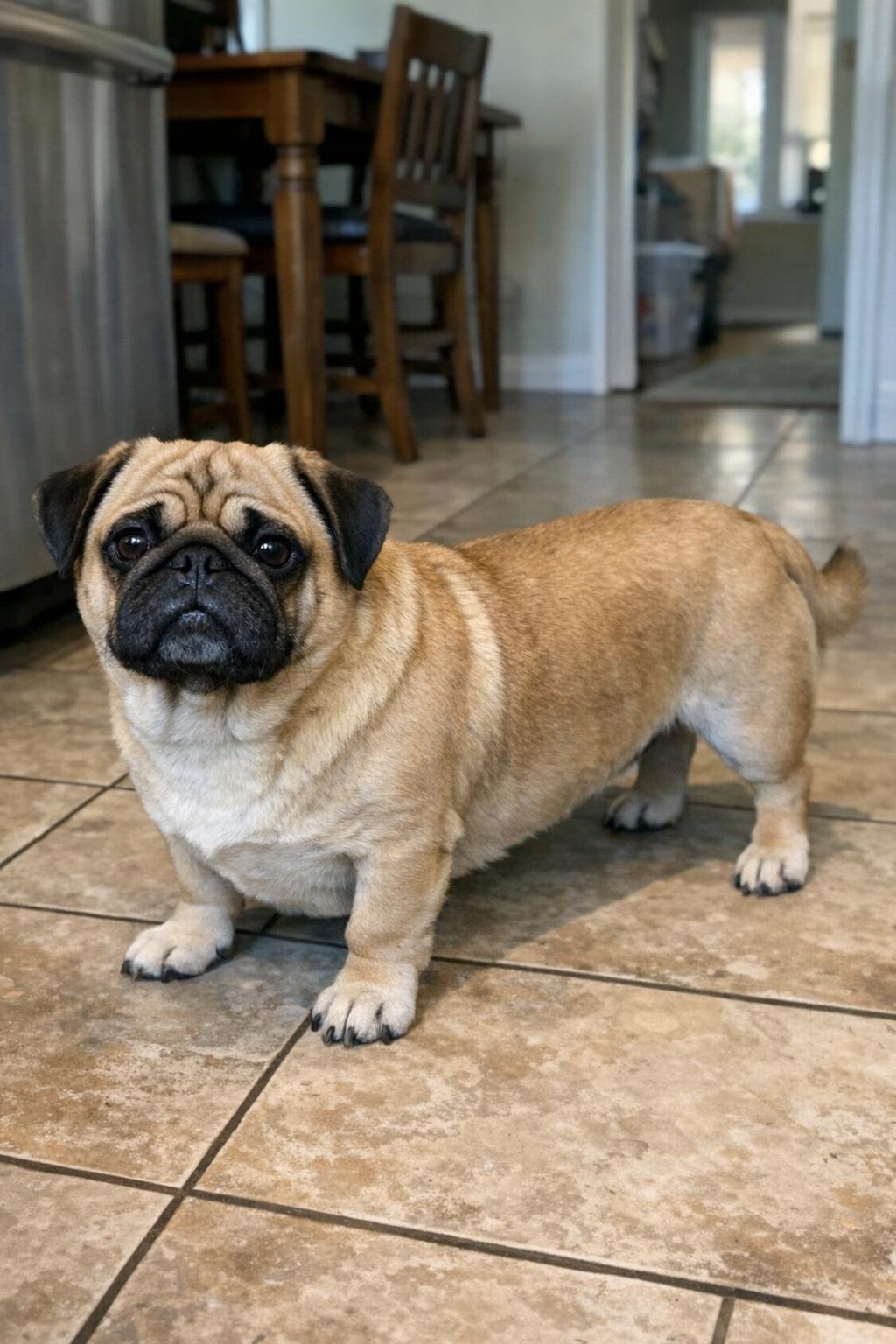
When my sister brought that little shelter dog home and told me they had him listed as a “Dachshund mix,” I smiled the way a person does when she already knows there is a little more to the story. I have been around enough farm dogs, porch dogs, rabbit hounds, and town mutts over the years to know that papers and shelter cards only tell part of it. Sometimes the truth is in the feet, sometimes in the ears, and sometimes in the face. In this case, the minute I saw him waddle across her kitchen floor with that long sausage-dog body and that comical little expression, I said, “Well now, there’s definitely another branch on that family tree.”
He is one of those dogs who looks like he was put together by a committee, and I mean that in the most affectionate way possible. He has the low, sturdy frame of a Dachshund, the compact chest of a small companion breed, and a face that makes everybody laugh before they even mean to. Around here, new dogs get looked over the same way we’d admire a new pie crust or a neighbor’s first tomatoes of the season: carefully, warmly, and with plenty of opinions. If you’re trying to guess the “other half,” let me show you the new kid.
See for yourself:
1. The face gives it away first
The strongest clue is that face. A pure Dachshund usually has a longer muzzle, a narrower skull, and a more tapered expression. This little fellow has a short, flat muzzle, deep-set round eyes, and those sweet forehead wrinkles that practically announce “pug” from across the room. If I were judging by face alone, I would say the other half is Pug within about 10 seconds.
When I first saw his profile, it reminded me of those old-fashioned character dogs who always look mildly concerned, as if someone has just told them supper might be 15 minutes late. That short-nosed look is not something Dachshunds tend to carry strongly, but Pugs certainly do.
2. The body is pure low-rider Dachshund
From the shoulders back, the Dachshund influence is doing a lot of heavy lifting. He has that long, low body set just a few inches off the floor, with short legs and a stretched outline that makes him look longer than he is tall by nearly a factor of two. If he stands about 10 to 11 inches high at the shoulder, his body may easily run 18 to 22 inches from chest to rump.
Dachshunds were bred for going to ground after badgers, rabbits, and other burrowing animals, so that elongated body is not just cute; it came from a working design. In a mix like this, that classic “wiener dog” silhouette often remains the first thing people notice after the face.
3. That sturdy chest points toward Pug
One thing I notice in many Dachshund-Pug mixes is a broader, more barrel-shaped chest than you see in a finer-boned Dachshund. This dog looks compact through the front, with a solid little rib cage and a stockier stance. Pugs tend to be square, muscular, and surprisingly hefty for their size, often weighing 14 to 18 pounds, while Dachshunds can range from about 11 to 32 pounds depending on type.
Put those together, and you often get a dog that looks long like a Dachshund but filled out through the middle and front like a Pug. It is a funny and lovable combination, like somebody stretched a Pug just a bit and set him on little sturdy legs.
4. The coat color fits the guess nicely
That tan or fawn coloring also supports the Pug idea. Pugs commonly come in fawn with a dark mask, while Dachshunds have a broader range: red, cream, black and tan, chocolate, dapple, and more. In mixed litters, you often see the warm tan body color carry through, especially when the Pug side is strong in the face.
If he has a darker muzzle or shading around the eyes and ears, that is another small nudge in the Pug direction. Color alone never proves a breed mix, but when it lines up with head shape, wrinkles, and body structure, it starts to make a convincing case.
5. The ears are a clue if you look closely
Dachshunds generally have longer, softer drop ears that frame the face, while Pugs have smaller ears that can fold in different ways, commonly called “button” or “rose” ears. In a Dachshund-Pug mix, the ears often land somewhere in the middle: not long and sweeping, not tiny and tight, but medium-sized and folded.
If his ears seem a little shorter than a typical Dachshund’s and sit closer to the head, that’s another reason I’d vote Pug. Shelter workers do their best, but ear shape can get overlooked when the long body is so obvious.
6. Why shelters often label dogs broadly
I always like to remind folks that shelter breed labels are educated guesses, not sworn testimony. Staff may have only a few minutes with each intake dog, and many dogs arrive without any history at all. If they see a long body and short legs, “Dachshund mix” is a reasonable starting point.
These days, even veterinarians and experienced rescuers can be surprised by DNA results. A dog may visually look 50 percent one thing and end up genetically more mixed than anyone expected. But if we are making an honest old-fashioned visual guess from this photo, Pug is the most likely answer by a country mile.
7. The common name for this mix is “Daug”
Yes, people do have a nickname for this cross: a Daug, made from Dachshund and Pug. I will admit it sounds a little funny to my ear, but then so do plenty of modern names. Back in my day, half the dogs in the county were named Rusty, Lady, Duke, or Penny, and that settled it.
Whatever one calls the mix, these dogs are known for being affectionate, clownish, and deeply attached to their people. They often inherit the Dachshund’s loyalty and the Pug’s sociable, comic charm, which makes them very easy to fall for.
8. Temperament clues match the mix too
If this new kid likes to be wherever the people are, follows your sister from room to room, and acts like a tiny supervisor during chores, that would fit both breeds beautifully. Dachshunds can be devoted, brave, and a touch stubborn. Pugs are famously companionable and usually want to stay within 3 feet of somebody they love.
A mix of the two often ends up playful and cuddly, with a streak of independence. In plain English, that means a dog who wants your lap, your snack, your blanket, and the final say on bedtime.
9. Health matters are worth keeping in mind
With a dog built this way, I would be especially mindful of two things: back strain from the Dachshund side and breathing or heat sensitivity from the Pug side. Long-backed dogs should not be encouraged to launch themselves off beds, couches, porches, or car seats. Even a jump of 18 to 24 inches, repeated many times a day, can add unnecessary stress to the spine.
On the Pug side, flat-faced dogs can struggle more in hot, humid weather. If the temperature is pushing above 80 degrees Fahrenheit, especially with Midwestern summer humidity, I would keep walks shorter, offer water often, and avoid midday exertion. A 10- to 15-minute stroll in the morning and again in the evening may suit him better than one long outing in the heat.
10. Weight control will make a big difference
This is one of those mixes where 2 or 3 extra pounds can matter more than people think. A small dog built low to the ground carries weight differently, and every extra pound puts more load on the back, elbows, and knees. If his ideal weight is, say, 18 pounds, letting him drift up to 21 or 22 may not sound dramatic, but on a compact frame it certainly is.
I’ve told my own family for years that the most loving thing you can do for a little dog is not overfeed him. Measure the kibble with an actual measuring cup, not a coffee mug. Keep treats to no more than about 10 percent of daily calories. Use green beans, tiny training treats, or pieces no larger than a pencil eraser when you can.
11. Training needs a gentle but steady hand
Dachshunds are clever, and Pugs can be charmingly opinionated, which is a polite way of saying this dog may hear a command, consider it, and then decide whether your plan has merit. That does not mean he is difficult. It just means consistency matters. Five-minute training sessions, two or three times a day, often work better than one long 30-minute session.
Use soft praise, a cheerful voice, and small rewards. If your sister is working on house training, she may want a regular schedule: first thing in the morning, after meals, after naps, after play, and right before bed. Predictability can solve a lot faster than scolding ever will.
12. His build may change a little as he settles in
Shelter dogs often look different after 30 to 60 days in a home. Once they are eating regularly, sleeping deeply, and no longer carrying that anxious shelter tension, their true shape starts to show. Muscles fill in. Coats get shinier. Expressions soften. A dog who first looked simply “mixed” can begin to show much clearer breed traits.
So if your sister has only had him a short while, I would expect his Pug side to become even more obvious as he relaxes. The face wrinkles may read more clearly, and his natural posture may get more confident once he knows this kitchen, this couch, and these people are his for good.
13. A DNA test could confirm it, but the visual guess is strong
If the family really wants to know, a canine DNA test usually runs somewhere around $70 to $130 depending on the brand and whether health screening is included. It can be a fun thing to do, especially for a rescue dog with a mystery attached. I know more than one grandchild who would happily make an afternoon event out of swabbing a dog’s cheek and waiting for the results like it was Christmas.
Still, without spending a penny, my practical answer is this: he looks very much like a Pug-Dachshund mix. Not sort of. Not maybe. Quite a lot.
14. My final vote on the “other half”
If I were sitting at my sister’s kitchen table with a cup of coffee and somebody asked me to put $5 on the breed mix, I would place it on Pug and not think twice. The long body says Dachshund, but the wrinkled flat face seals the deal. He is the very picture of a Pug-Dachshund cross.
And I will say this too: whatever his exact percentages are, he has already won the important part. He is home. For a shelter dog, that matters more than any label ever could. But as for your question, my answer is simple: that new kid looks like a Dachshund mixed with Pug, and a mighty cute one at that.