
 Dogs
 Cats
 Birds
 Horses
 On the Land
 In the Sea
Last week our Great Dane delivered six puppies, and I still feel like I’m running on coffee, adrenaline, and pure amazement. If you’ve ever been around a giant-breed litter in those first few days, you know how quickly your house turns into a full-time nursery. Between weighing puppies, changing bedding, making sure everyone is nursing well, and answering a flood of texts from family and friends, I’ve barely sat down. But the moment people stop mid-sentence and lean in is always the same: they notice the last puppy.
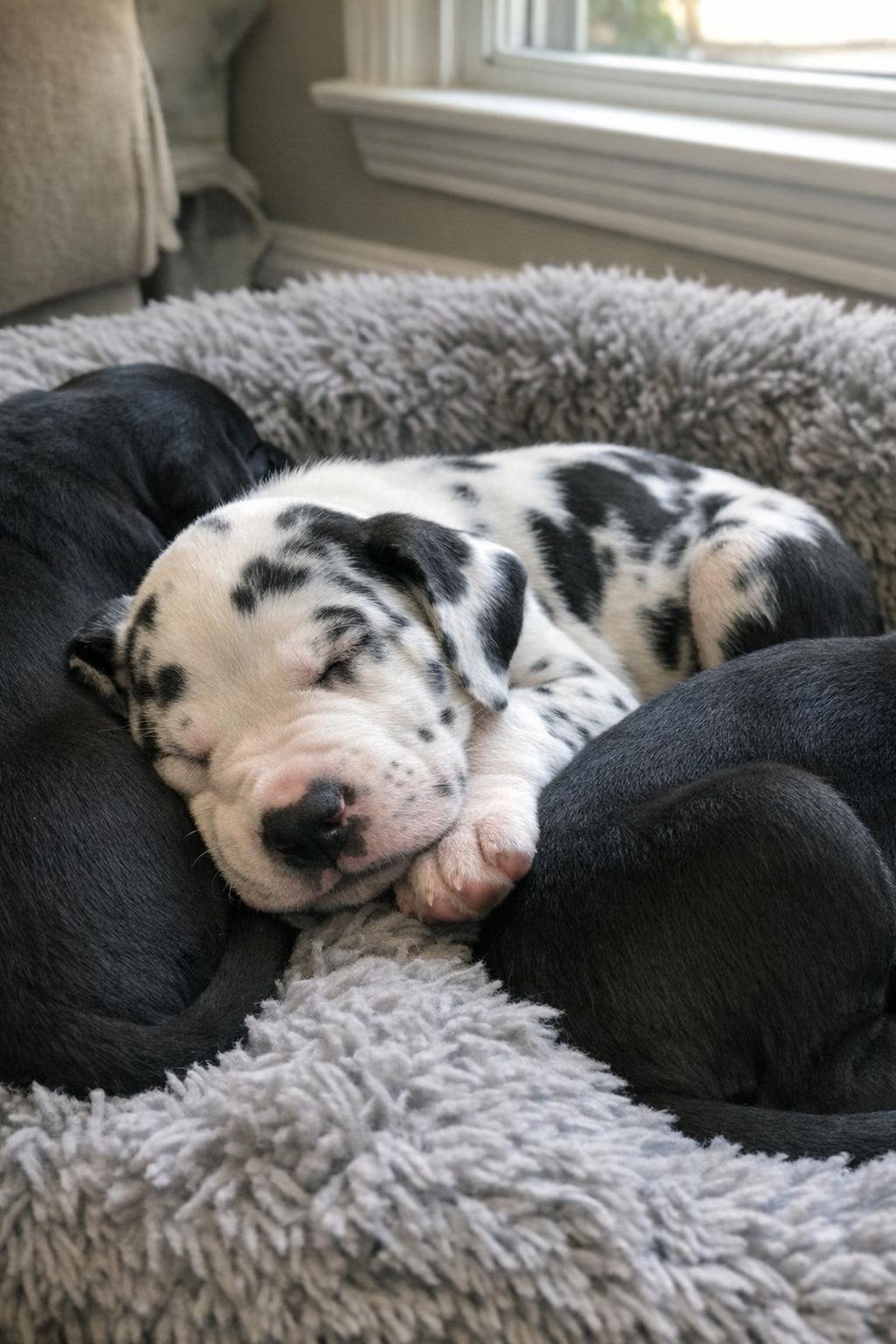
At first glance, the litter looks pretty straightforward, especially if you’re expecting a group of dark-coated Dane babies curled up in a heap. And then there’s one little pup who makes everyone ask if we’re absolutely sure she came from the same litter. The coloring is so striking that even friends who’ve had dogs their whole lives have said, “Wait, how is that even possible?” The short answer is genetics, and specifically the harlequin pattern in Great Danes. But before I get into the why, here’s the puppy everyone keeps gasping over.
See for yourself:
1. Why this puppy looks so different from the others
The dramatic white coat with irregular black patches is what many people recognize as a harlequin Great Dane pattern. In simple terms, this isn’t paint, a trick of lighting, or evidence that something strange happened in the whelping box. It’s a genetic coat pattern that can appear in Danes when the right genes line up.
What surprises people is that one puppy in a litter can look wildly different from the others even though all six share the same parents, the same due date, and the same crowded gray dog bed in my living room. Coat color genes don’t “blend” evenly across a whole litter. Each puppy gets its own genetic combination, like six separate shuffles from the same deck.
2. The harlequin gene is the big reason
The underlying explanation here is the dominant harlequin coat gene. In Great Danes, the harlequin pattern depends on a specific genetic setup, and one of the key pieces is a dominant gene. “Dominant” means a puppy only needs one copy for that gene to have an effect, assuming the other necessary pattern genes are also present.
That’s why breeders and longtime Dane owners aren’t shocked by a single eye-catching puppy in a litter, even if casual observers are. You can have several puppies with darker, more solid-looking coats and then one with that unmistakable white base and jagged torn-paper style black patches. It feels dramatic, but genetically, it’s very possible.
3. Harlequin in Great Danes usually builds on a merle background
This is the part I find fascinating, because once I learned it, a lot of coat-color mystery started making sense. Harlequin in Danes typically doesn’t happen all by itself. The classic pattern usually appears when a puppy inherits the merle gene and also inherits the harlequin gene that modifies that merle pattern.
Instead of the gray marbling that people often associate with merle, the harlequin effect removes much of that pigment and leaves a mostly white coat with distinct black patches. That’s why the puppy can look so starkly different from solid black littermates. You’re not looking at a random fluke. You’re seeing one genetic pattern heavily modified by another.
4. Why the spots are jagged instead of round
One thing people always comment on is that the markings don’t look neat or symmetrical. They’re irregular, broken, and almost torn-looking along the edges. That’s actually very typical of harlequin Danes. The black patches can vary a lot in size, from a small patch near one ear to larger body sections several inches across.
In our puppy’s case, the contrast is especially dramatic because the white is so bright and the black is so dense. Sleeping next to solid black siblings only makes that visual difference stronger. It’s basically the canine version of putting a black-and-white patterned throw pillow next to five charcoal ones and wondering how it got there.
5. Yes, puppies from the same litter can have very different coats
If you’ve only seen litters where all the puppies look nearly identical, a Great Dane litter can be a surprise. Depending on the parents’ genetics, one litter can include black, mantle, merle, and harlequin-patterned puppies. You can even get a huge range in how bold or minimal those markings are.
That’s one reason experienced breeders keep records so carefully. Color outcomes are not guesses made after birth; they’re probabilities based on the parent dogs’ genetics. In everyday terms, though, I explain it like this: same mom, same dad, same litter, different recipe cards pulled from the same family file.
6. “Dominant” does not mean every puppy will look the same
This is one of the biggest points of confusion. People hear “dominant gene” and assume every puppy should inherit it or display it in the same obvious way. But dominant only means that if a puppy inherits that gene, one copy can be enough to affect appearance. It does not mean every puppy in the litter receives it.
In a litter of six, you can absolutely have variation. One puppy may inherit the right combination for a striking harlequin pattern, another may be black, another may carry genes you can’t see just by looking, and another may express a related pattern differently. Genetics is orderly, but it rarely looks uniform in the whelping box.
7. Why people sometimes think the white puppy can’t be from the same parents
Honestly, I understand the reaction. When you see five dark puppies and one mostly white puppy with black spots, your brain wants to sort them into separate categories. We’re used to family resemblance being obvious. But canine coat inheritance doesn’t work like matching T-shirts.
I had a neighbor stop by with muffins and she genuinely lowered her voice and asked whether the spotted one had somehow been “mixed in” by mistake. That made me laugh, mostly because this puppy had been weighed every 12 hours since birth and has spent every minute piled under the same sleepy mom. The appearance is unusual, but the genetics are not impossible at all.
8. What this pattern does and does not mean for health
A harlequin coat pattern by itself is about color, not personality, not intelligence, and not whether the puppy will be extra dramatic later in life—although as a Dane owner, I reserve the right to suspect all of them will be dramatic. The main point is that coat pattern is a visible genetic trait. It isn’t a guarantee of better or worse temperament.
That said, responsible Great Dane breeding does involve understanding color genetics because certain combinations can raise health concerns. Ethical breeders pay close attention to pairings, pedigrees, and often DNA testing, especially when working with merle- and harlequin-related lines. This is one reason knowledgeable breeding matters so much more than simply hoping for cute color outcomes.
9. The first week with six Great Dane puppies is a full-time job
Color aside, these puppies are still newborns, and giant-breed newborns require careful monitoring. We’ve been doing daily checks that include nursing observation, body temperature awareness, and weight tracking. In the first week, even a small change matters. I keep a notebook on the kitchen counter and log each puppy’s weight in grams at roughly the same time every day.
Our bedding routine has been nonstop. We rotate clean blankets and washable pads multiple times a day, because six puppies plus one giant mom can turn a tidy setup into chaos in about 20 minutes. The fluffy gray bed in that photo looked adorable for approximately five minutes before I had to straighten everything again.
10. How we tell the puppies apart right now
People assume the spotted puppy is the easiest one to identify, and that part is true. The rest, especially in a sleepy pile, can take a second look. In these early days, breeders often use temporary ID methods like colored soft collars, non-toxic whelping bands, or careful written notes tied to tiny physical differences.
For example, one black puppy might have a small white chest mark the size of a nickel, another might have two white toes on the left front paw, and another might be 3 ounces heavier than the rest. When you’re monitoring six puppies around the clock, those details matter. The dramatic coat may grab attention, but each puppy still needs individual tracking.
11. What to expect as the coat develops over the next several weeks
Newborn coats can shift a little as puppies grow. The basic pattern is there, but contrast, edge definition, and how large the patches appear can become clearer over the first 4 to 8 weeks. A pup that looks especially bright white in a close-up photo may settle into a slightly different visual balance as the body lengthens and fur changes.
That’s another reason I tell people not to assume they’ve seen the final look in week one. Great Dane puppies change fast. Ears look too big, paws look comically oversized, and markings that seem clustered in one spot can look more evenly distributed by the time the puppy is bouncing around instead of sleeping in a warm pile.
12. Why genetics feels magical even when it’s explainable
I love this part because it’s where science and emotion meet. I can explain the dominant harlequin gene, the role of merle, and why different puppies inherit different combinations. I can talk about pattern expression and responsible breeding choices. All of that is real, useful, and important.
But I can also admit that the first time I saw that tiny white puppy tucked beside five black siblings, I just stared. Some things are fully explainable and still feel incredible. That’s exactly what this litter has been for me.
13. The short answer to “How is this even possible?”
If you want the simplest version to tell your friends: it’s possible because Great Dane coat color is controlled by inherited genes, and one puppy received the combination that produced the harlequin pattern. The standout look comes from the dominant harlequin gene working in the right genetic context, rather than from anything mysterious or accidental.
So yes, she really is from the same litter. Yes, this can happen naturally. And yes, every single person who visits still gasps when they see her sleeping there like she has no idea she’s become the star of the nursery.