
 Dogs
 Cats
 Birds
 Horses
 On the Land
 In the Sea
If your dog has a habit of scooting over at bedtime and pressing their back right up against yours, you are definitely not imagining that it means something. I’ve lived with dogs through puppy years, middle age, and those slower senior seasons, and one thing I’ve learned is that their sleeping positions are often full of quiet little messages. This particular one can feel especially sweet because it is both cozy and intentional.
For devoted dog owners, especially those of us with older dogs, this back-to-back sleeping habit can point to comfort, trust, warmth, and even a few physical needs that are easy to miss during the day. Below are 9 surprising reasons your dog may sleep with their back against yours, along with a little practical insight to help you understand what your companion may be asking for each night.
1. They trust you enough to relax deeply
When a dog presses their back against you, they are often choosing one of the safest positions they know. In canine body language, turning part of the body away while staying in contact can show complete confidence. Your dog is saying, in their own quiet way, that they do not need to stay on full alert because you are there. That matters even more for older dogs who may feel less steady on their feet or more vulnerable when they sleep.
I’ve noticed senior dogs will often do this after evening routines become predictable: last potty trip, a small drink of water, lights out by 10 p.m., and then that familiar lean against your hip or lower back. If your dog settles within 2 or 3 minutes, sighs, and loosens their muscles, that usually points to emotional security rather than restlessness.
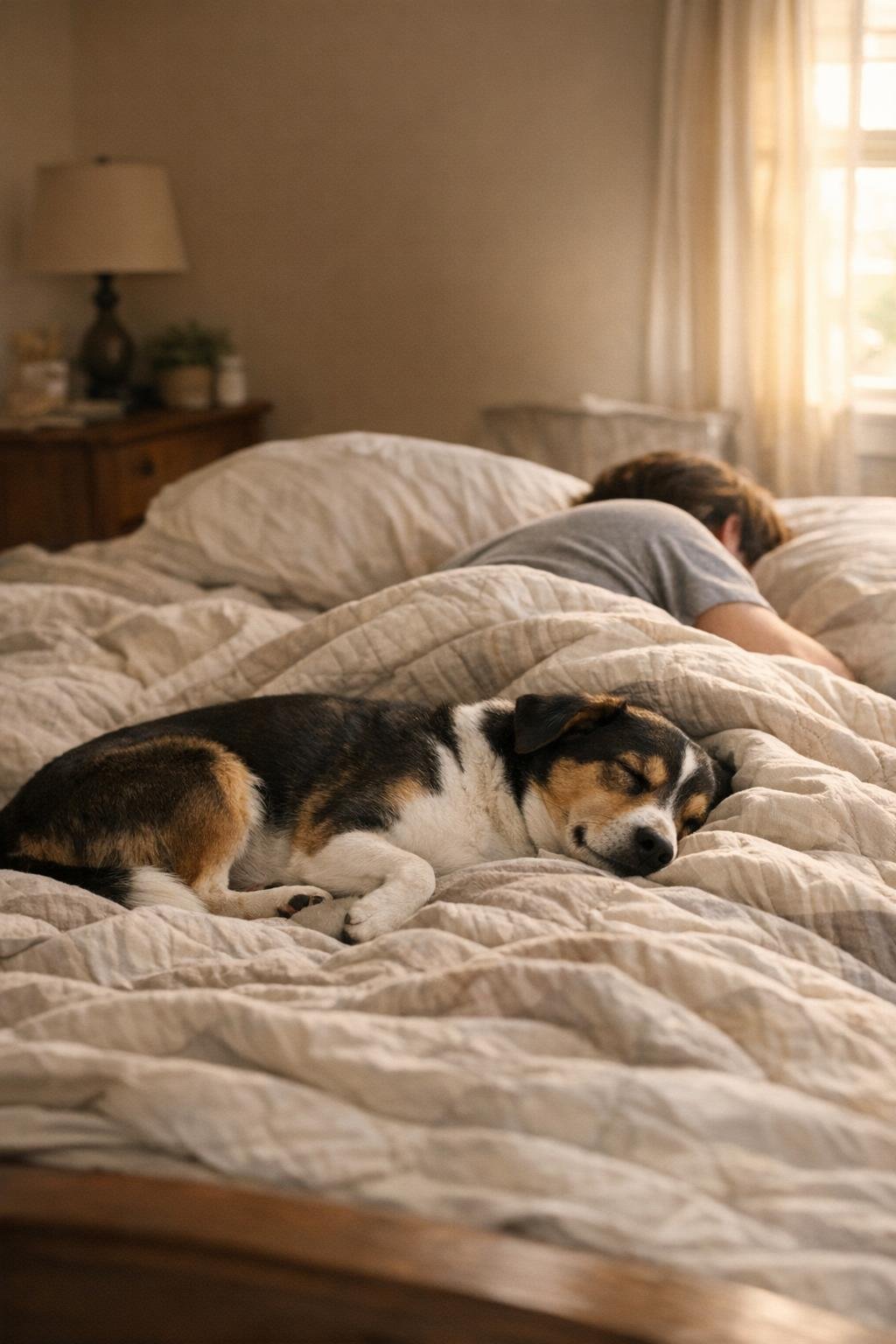
2. They are guarding you while they rest
This one surprises a lot of people because the position looks passive, but it can actually be protective. By placing their back against you and facing outward, your dog may be resting in a way that still lets them monitor the room, bedroom door, or hallway. It is a bit like standing watch without fully staying awake.
Dogs who do this often choose the same side of the bed night after night, especially if that side faces the entrance. In my house, I’ve seen dogs settle with their spine touching mine while their nose points toward the door about 8 to 12 feet away. If your dog perks up at hallway sounds but stays planted against you, that can be a pretty strong clue that they feel responsible for keeping tabs on things.
3. They want steady body warmth
Dogs run warmer than we do, but they still love a reliable heat source, especially as they age. Older dogs can lose muscle mass and may have a harder time staying comfortable through cooler nights, particularly if the room drops below about 68 degrees. Your back gives off steady warmth over a broad area, which can feel more soothing than curling up alone at the edge of the bed.
If your dog seems more likely to press against you during winter, on nights with the fan on, or after a trim at the groomer, warmth may be a big part of the reason. You might even notice them shift closer around 3 a.m. when the house cools down. In that case, adding a washable fleece throw or an orthopedic pet bed beside your mattress can give them another warm option without taking away that closeness they enjoy.
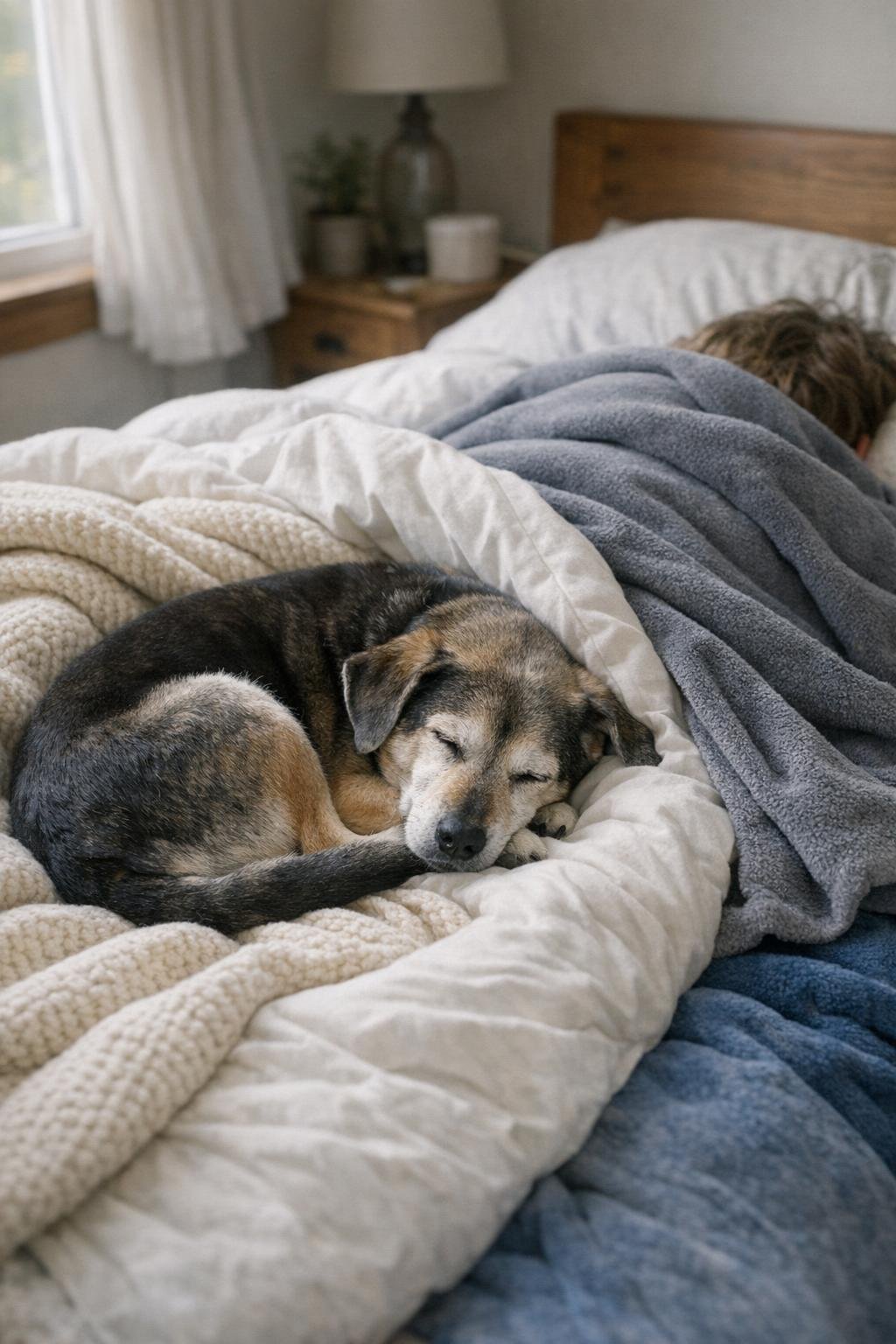
4. They may be easing joint or muscle discomfort
For senior dogs, contact can be physically helpful as well as emotional. A gentle brace against your back can make them feel more stable if they have stiffness in the hips, mild arthritis in the spine, or general soreness after a busy day. That light pressure can reduce the effort of holding one position, especially on a mattress where surfaces shift a little.
If your older dog circles several times, lowers themselves carefully, or struggles a bit before choosing to lean against you, I would pay attention to comfort. Dogs with joint changes often settle best with support under the chest and hips, so a folded blanket 2 to 3 inches thick or a low bolster near their sleeping spot can help. If the back-pressing suddenly becomes much more frequent, it may be worth mentioning to your veterinarian during the next visit.
5. Your scent helps them settle faster
Dogs experience the world through scent first, and your smell is one of their strongest anchors. When your dog sleeps with their back against yours, they are surrounding themselves with a familiar scent that signals safety, routine, and home. This can be especially important for older dogs dealing with hearing loss or fading vision, because scent stays dependable even when other senses change.
I’ve seen this most clearly with aging dogs who become a little unsettled after dark. They may pace for 5 or 10 minutes, then calm almost immediately once they feel and smell their person nearby. If this sounds like your dog, keeping bedtime consistent and using the same blanket or sleep shirt for several nights in a row can be surprisingly comforting.
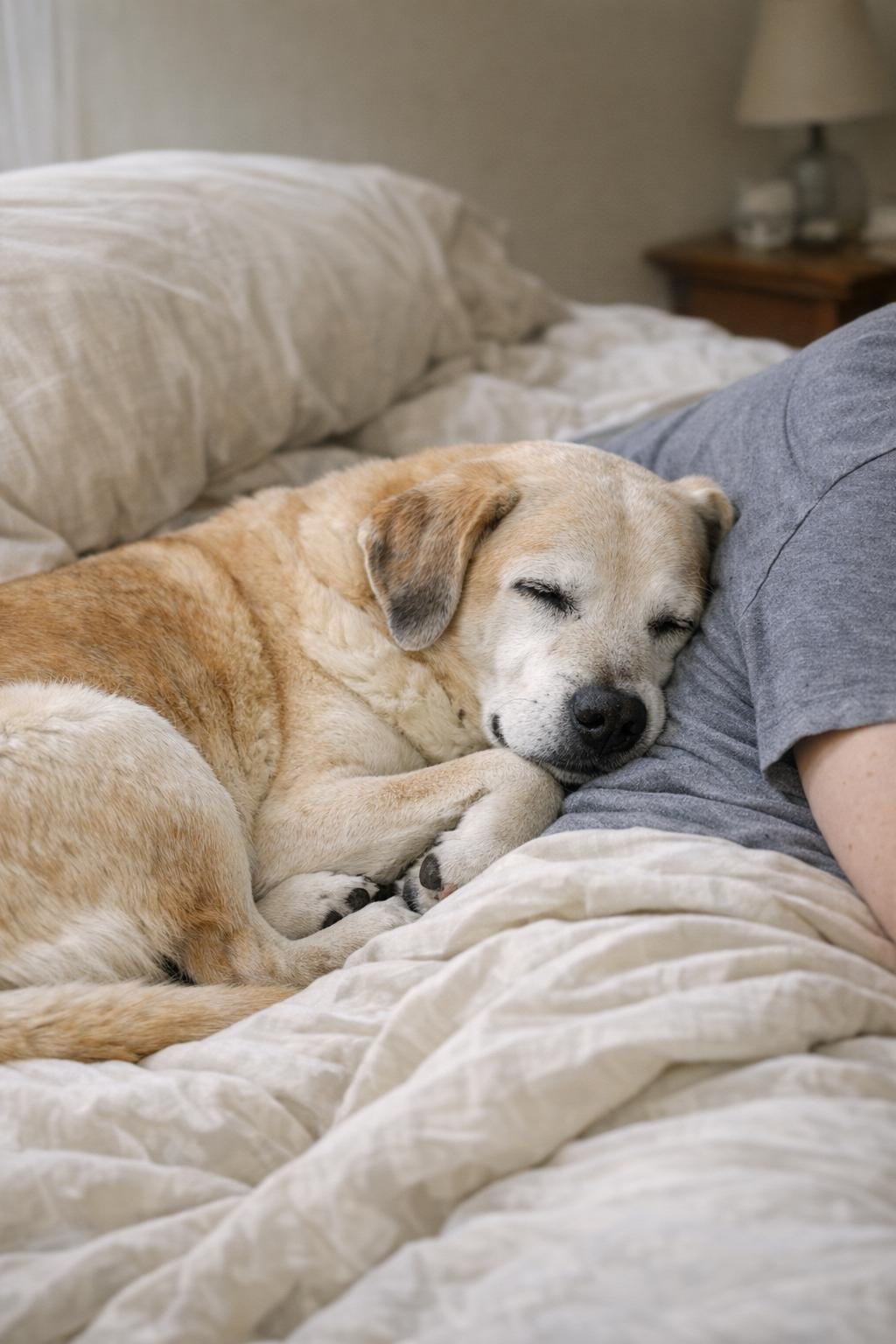
6. They are copying pack-style sleeping behavior
Even our very domesticated dogs still carry some social sleeping instincts. In a group, animals often rest close together for safety, shared warmth, and quick communication. Pressing against you can be the home version of that instinct. Your dog is treating you as part of their trusted sleeping group.
This tends to show up most in bonded dogs who also follow you from room to room, nap near your feet during the day, or wait outside the bathroom door like a furry little shadow. If your dog makes full-body contact at night after staying near you all day, it is often less about neediness and more about connection. For many older dogs, that closeness becomes even more important as their world gets smaller and routines mean more.
7. They are looking for reassurance if they feel anxious at night
Some dogs become more uneasy after dark, and older dogs in particular can develop nighttime anxiety. Household sounds seem louder when the house is quiet, and age-related changes can make disorientation worse in dim light. Pressing their back against you gives them a steady physical reminder that they are not alone.
If your dog only does this during storms, when guests have recently stayed over, or after schedule changes, anxiety may be driving the behavior. I usually tell fellow dog owners to look at timing: does the leaning start within 10 minutes of thunder, wind, or lights going out? A small night-light in the hallway, white noise, and a predictable bedtime can make a real difference for dogs who just need that extra reassurance.
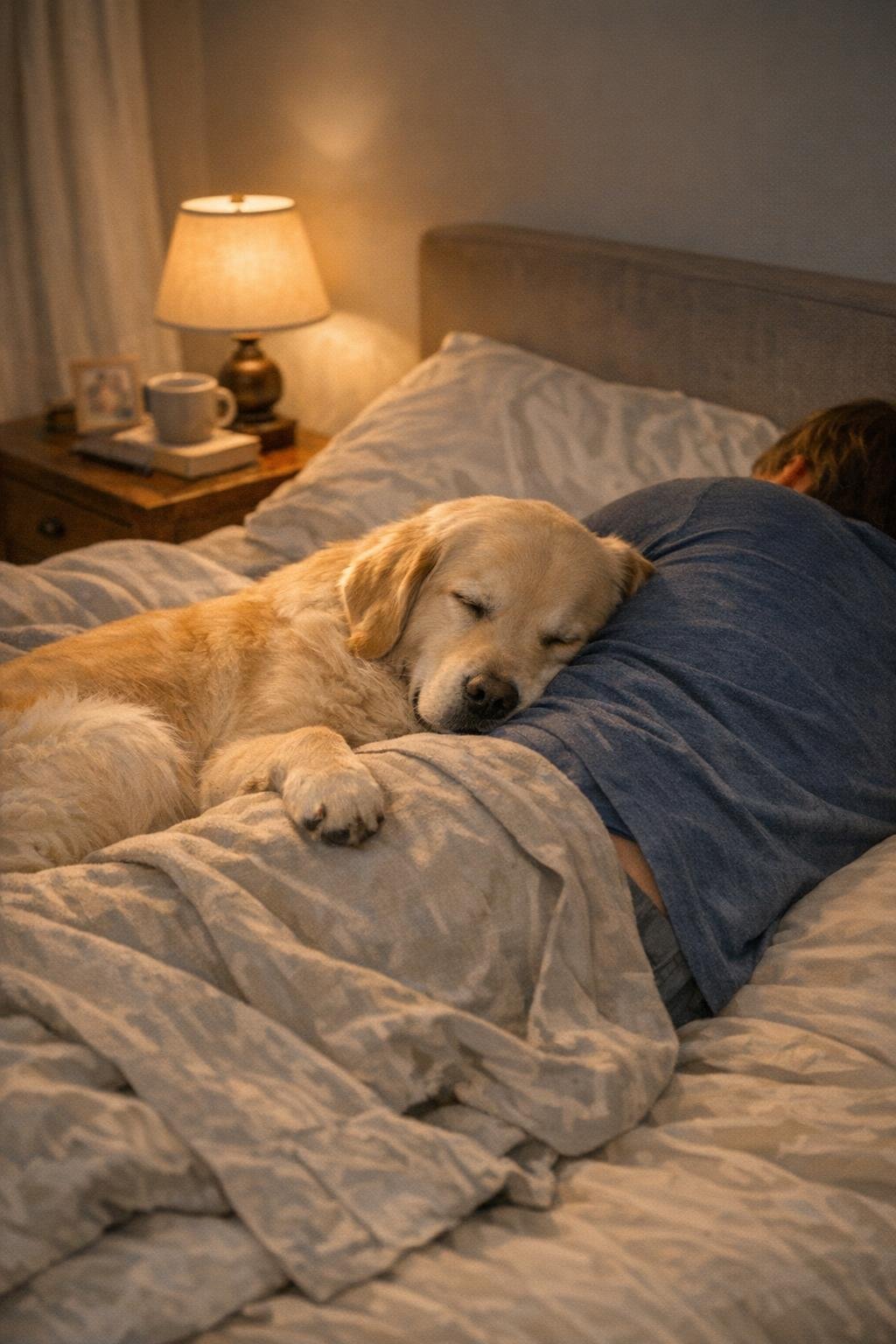
8. They are claiming a favorite sleeping spot beside their favorite person
Sometimes the sweetest explanation is also the simplest: your dog just loves that spot. Beds have warm dips, familiar textures, and little pockets of comfort, and your side may be the most appealing place in the room. By settling back-to-back, your dog gets the best of both worlds: a prime mattress spot and contact with the person they adore most.
If your dog heads straight for the same 18-inch stretch of bed every evening, this can be more habit than mystery. In multi-pet homes, I often see dogs choose a position that gives them a little personal space while still keeping close contact with their person. If you want to preserve your own sleep space, laying out a designated dog blanket in that exact area can help them understand where their cozy “reservation” starts.
9. They may be asking quietly for a little extra closeness
As dogs age, many become more deliberate about affection. They may not zoom around the house anymore, but they choose contact in more meaningful ways. Sleeping with their back against yours can be a gentle request for companionship, especially if they spend more time resting during the day or have become less interested in rough play.
I think this is the reason that tugs at most dog owners’ hearts, because it feels so personal. When an older dog chooses to spend 6 or 7 nighttime hours tucked against you, they are often saying that your presence still matters in the biggest way. If your dog is otherwise eating well, moving comfortably, and sleeping soundly, this habit is usually one to appreciate rather than discourage.
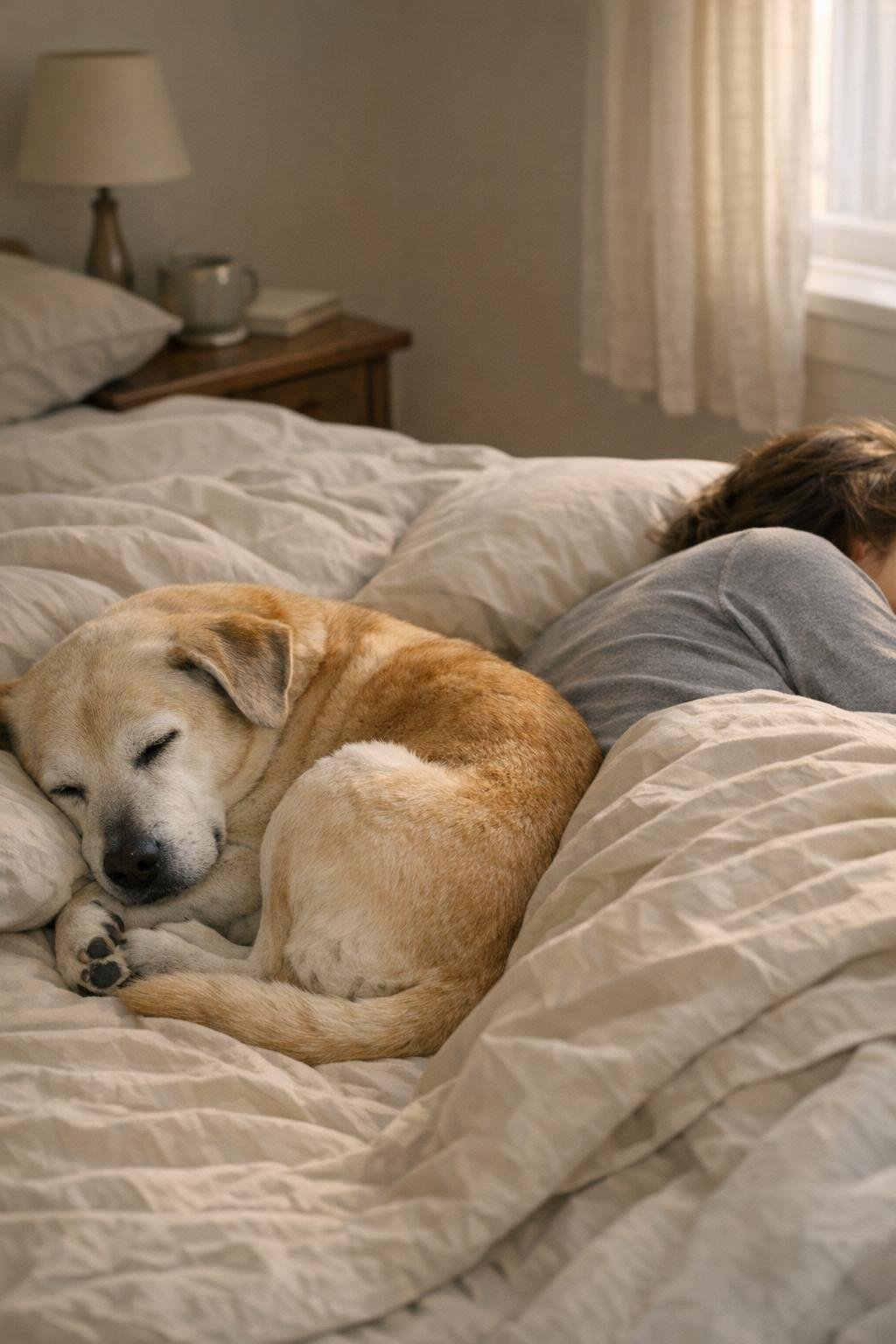
If your dog sleeps with their back against yours, chances are you are seeing a beautiful mix of instinct, comfort, and devotion. For those of us lucky enough to share our homes with older dogs, these small bedtime habits can be some of the most meaningful signs of trust we ever receive.