
 Dogs
 Cats
 Birds
 Horses
 On the Land
 In the Sea
There is something deeply touching about a dog climbing close, settling in, and laying that warm, solid head right on your chest. I’ve had dogs most of my life, and even now I still pause when one does it, because it feels so intentional. It’s not quite the same as sitting near your feet or curling up at the end of the sofa. This is closer, heavier, and somehow more personal.
In my experience, that little habit can mean several different things at once: comfort, trust, communication, and sometimes even a clue about your dog’s health or mood. If you’ve ever wondered why your dog chooses your chest in particular, here are 11 surprising reasons, along with what I’d watch for in the moment.
1. They’re soothed by your heartbeat
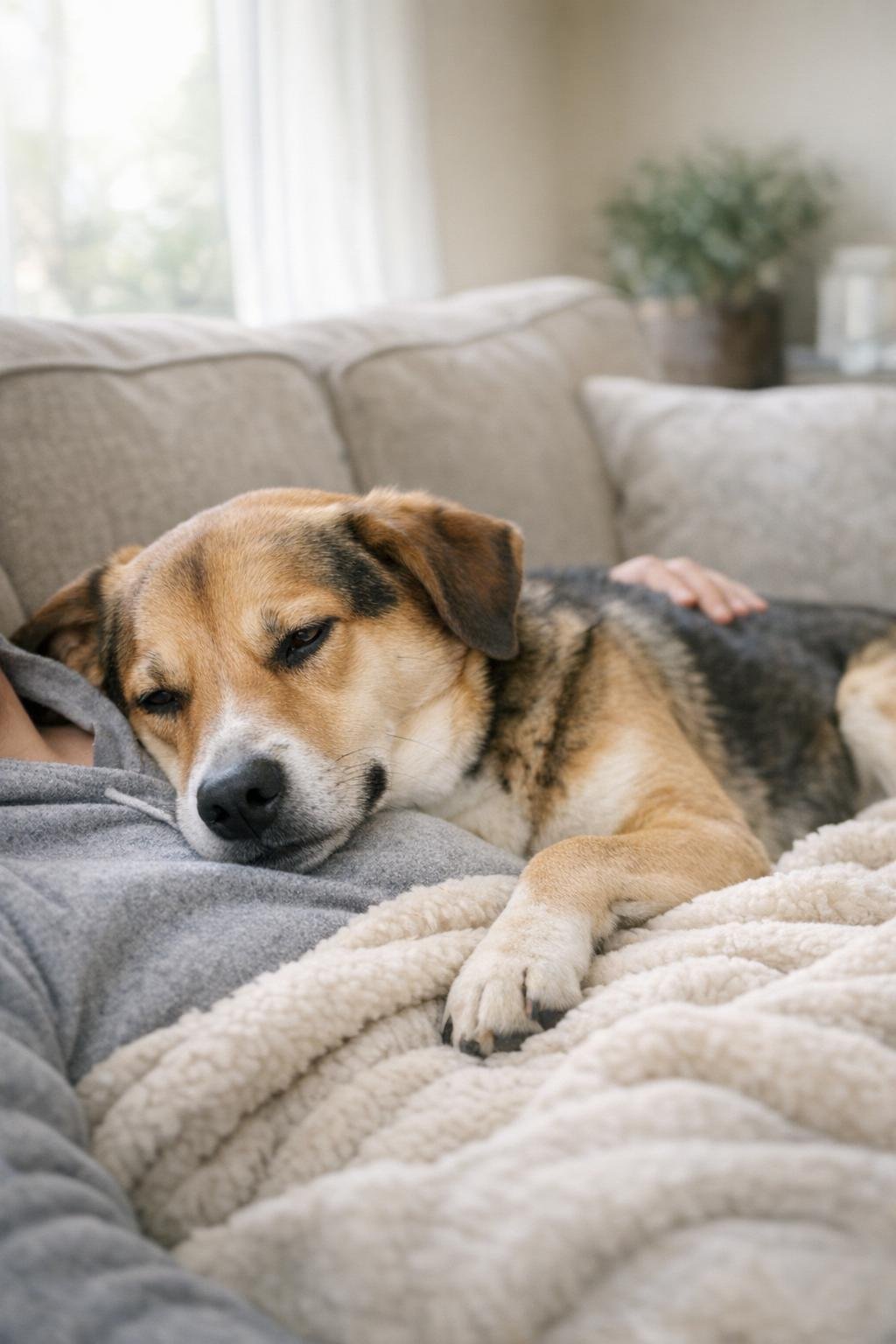
Your dog can feel the gentle rhythm in your chest far more clearly than they could on your knee or beside your hip. That steady thump can be calming in the same way a ticking clock or soft background noise settles some animals. Older dogs, rescue dogs, and dogs that startle easily often seem to relax within 2 to 5 minutes once they’re stretched across a familiar person’s torso.
I’ve noticed this most on quiet evenings, especially when a dog is mildly unsettled by wind, rain, or distant traffic. If the rest of their body softens, their ears relax, and their breathing slows from quick panting to long, even breaths, they may simply be using your heartbeat as a built-in comfort signal.
2. They want your full attention
Some dogs learn very quickly that chest contact gets an immediate response. You stop reading, put down the remote, or pause your conversation and look right at them. For a social dog, that is a wonderfully effective tactic. Resting a 20- to 70-pound head across your chest is harder to ignore than a quiet stare from across the room.
If this happens at predictable times, such as around 7 p.m., before the bedtime walk, or when you’ve been on the phone for 10 minutes, attention-seeking may be the simplest explanation. It is not bad behavior on its own; it is often just a very successful one-to-one communication method.
3. They’re checking in on how you feel
Dogs are remarkably observant about changes in breathing, muscle tension, and routine. When you are tired, upset, recovering from illness, or simply quieter than usual, your dog may come closer to investigate and reassure themselves that all is well. The chest is a prime place to notice breath rate and body tension.
I have seen dogs do this when their person has a cold, after a difficult day, or while resting in bed with a heating pad nearby. If your dog approaches gently, studies your face, and then settles their head on your chest without much fidgeting, it may be their version of, “I’m here, and I’m keeping an eye on you.”
4. Your warmth feels especially good
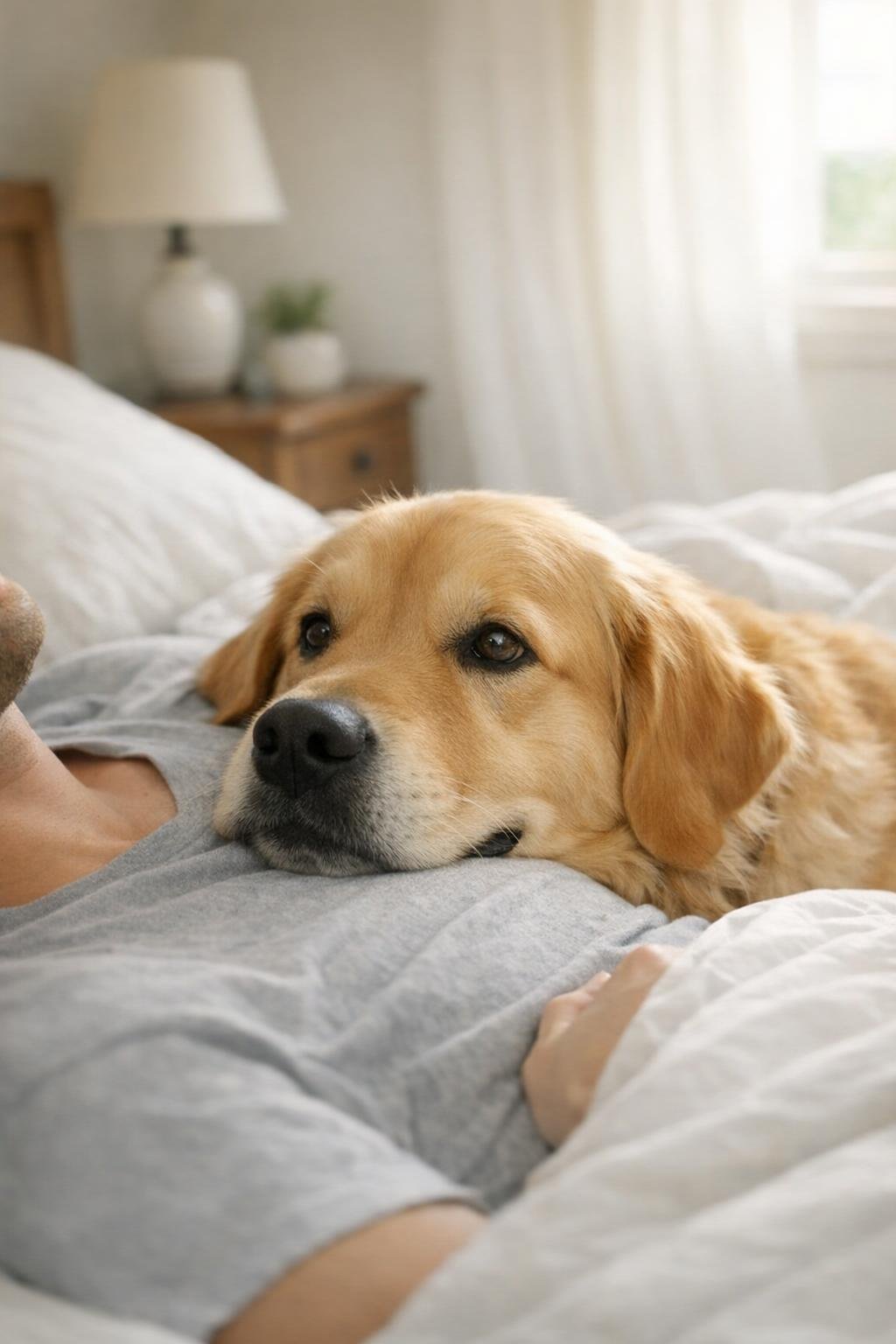
The chest and upper torso hold steady body heat, and many dogs are absolute experts at finding the warmest square foot in the house. Small breeds, short-haired dogs, seniors, and lean dogs often seek out heat more deliberately, especially in winter or in air-conditioned rooms kept around 68 to 70 degrees.
If your dog chooses your chest after a bath, on cold mornings, or when you’ve just come in from outdoors, warmth may be a major part of the appeal. A fleece throw, heated bed, or draft-free resting area can sometimes reduce how often they need to borrow your body heat.
5. They feel safest in the highest-contact spot
For some dogs, especially those who are anxious or came from unstable backgrounds, close body contact is about security. Being pressed against your chest means they can feel your movement, your breath, and your presence all at once. That full contact can make a nervous dog feel more anchored than simply lying at your side.
This often shows up during thunderstorms, fireworks, or unfamiliar houseguests. If your dog seeks your chest specifically during stressful events and then leaves once the noise or commotion passes, they may be using you as a safe base in the most direct way they know.
6. It’s a leftover puppy instinct
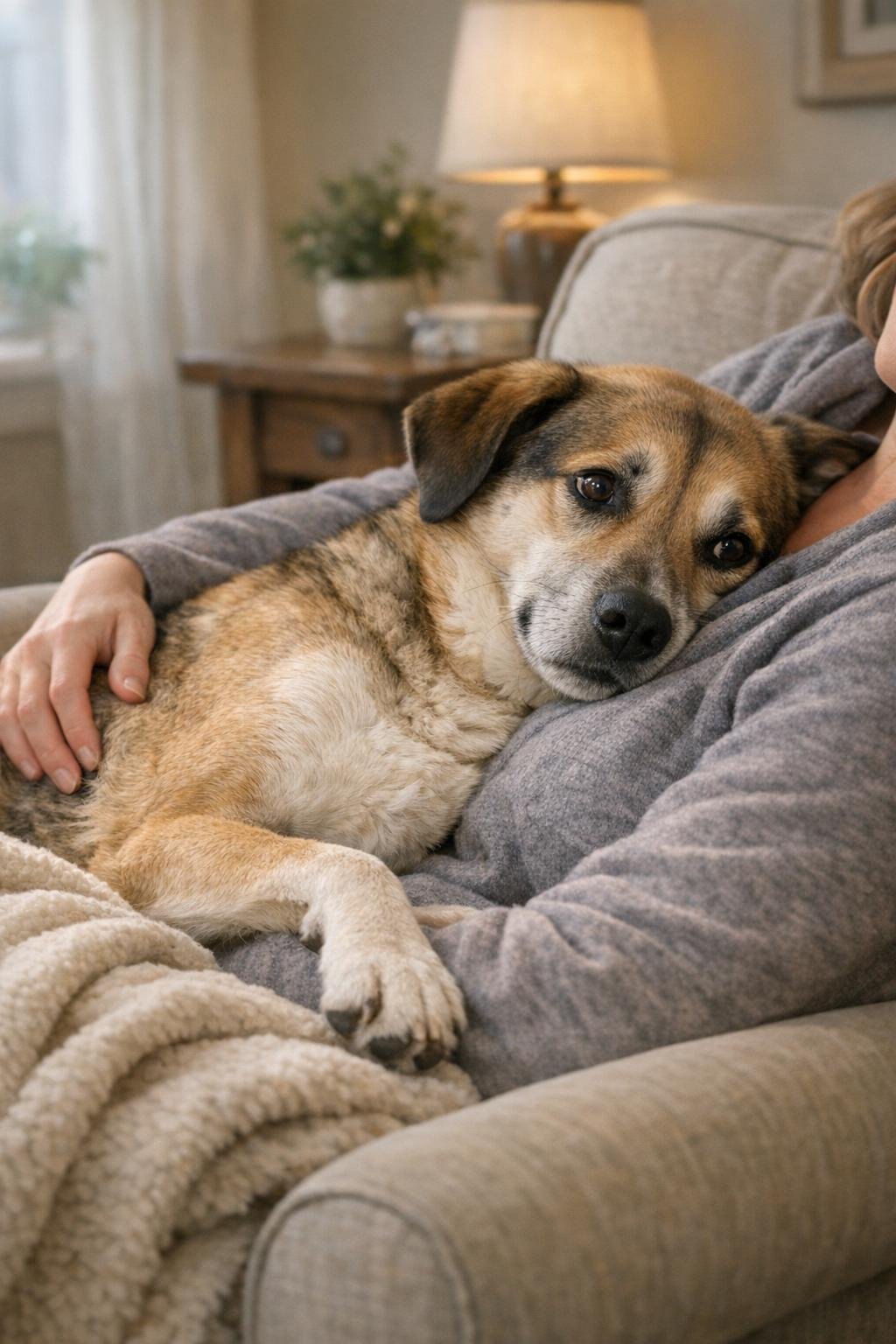
Puppies spend their earliest weeks piled against littermates and their mother, sharing warmth, heartbeat-like vibrations, and constant touch. Some dogs carry that preference for chest-level closeness into adulthood, particularly if they were heavily cuddled when young or naturally inclined to be “velcro dogs.”
When an adult dog drapes their head across you and falls asleep almost instantly, I often think of that early nestling behavior. It is less about neediness and more about an old, ingrained association: close contact equals rest, safety, and belonging.
7. They may be gently claiming you as theirs
Dogs do not think about ownership the way people do, but they absolutely use body placement to express closeness and preference. Putting their head on your chest can be a quiet way of saying, “This is my person.” It often appears when other pets are nearby or when a dog wants to stay physically between you and the rest of the room.
In a multi-pet home, I’d watch the timing. If your dog does this the moment another dog approaches the sofa or when company sits beside you, there may be a mild possessive streak in the gesture. Usually it is harmless affection, but stiff posture, hard staring, or blocking behavior means it is worth discouraging and discussing with a trainer.
8. They’ve learned it earns petting in exactly the right spot
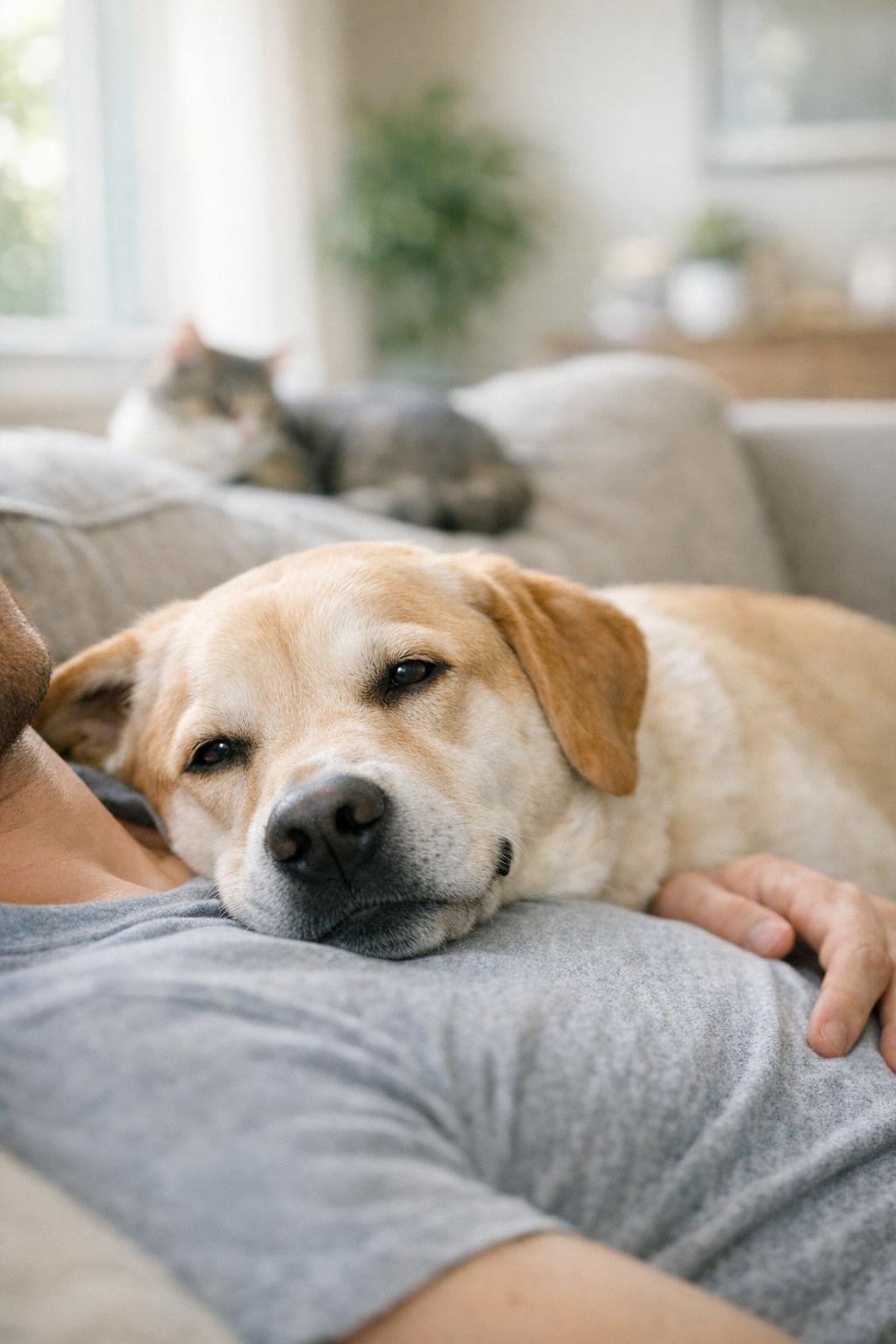
Many dogs discover that head-on-chest positioning leads to slow strokes over the ears, neck, and shoulders, which happen to be favorite petting zones. It is practical as well as affectionate. From that angle, your hand naturally lands along the side of the face, under the collar line, or between the shoulder blades.
If your dog melts the instant you start rubbing their ears for 30 seconds or scratching the base of the neck, they may simply be arranging you for maximum comfort. Dogs are wonderfully efficient that way. They repeat what works, especially if the result is a good five-minute petting session.
9. They’re responding to your breathing when you lie down
When you recline, your chest rises and falls in a slow, noticeable pattern that some dogs seem to find fascinating and reassuring. The motion is gentle, rhythmic, and very different from the stillness of your lap. A dog who settles there may be syncing themselves to that movement without any conscious plan.
This is especially common at bedtime or during afternoon naps, when the house is quiet and your breathing is deeper. If your dog places their head on your chest and then adjusts once or twice before becoming completely limp, they may be finding the exact spot where your breathing feels most calming.
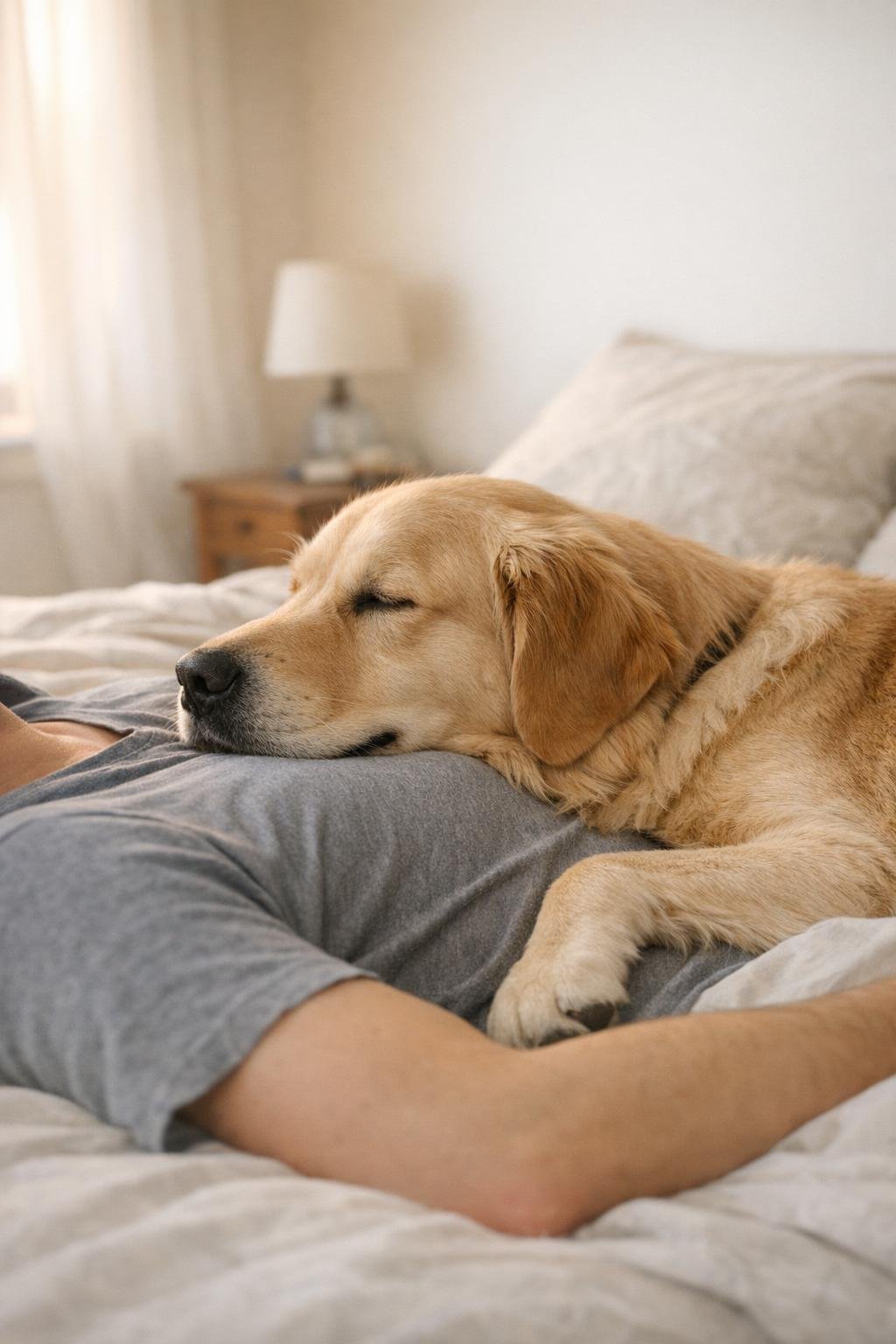
10. They may be asking for comfort because something feels off
Sometimes chest-resting increases because a dog is not feeling quite right. Mild stomach upset, joint pain, fatigue, or age-related confusion can make a dog more clingy and contact-seeking. Senior dogs in particular may look for extra reassurance at odd hours, such as waking at 3 a.m. and insisting on close physical contact.
If this behavior is new, much more frequent, or paired with limping, pacing, panting at rest, appetite changes, or trouble settling, I would not dismiss it as “just being cuddly.” A vet check is wise, especially for older dogs. Subtle behavior changes are often the first sign that something needs attention.
11. It’s one of the clearest signs of deep trust
In the end, one of the most meaningful reasons is also the simplest: your dog trusts you completely. Resting the head is a vulnerable act. They are giving up vigilance, relaxing the neck, and choosing closeness over distance. For many dogs, especially independent ones, that says a great deal.
I never take it lightly when a dog does this and truly lets go, sometimes with a sigh, a slack jaw, and eyes half closed within a minute or two. Out of all the places in the room, they picked you. That is not a small thing. It is affection made wonderfully plain.
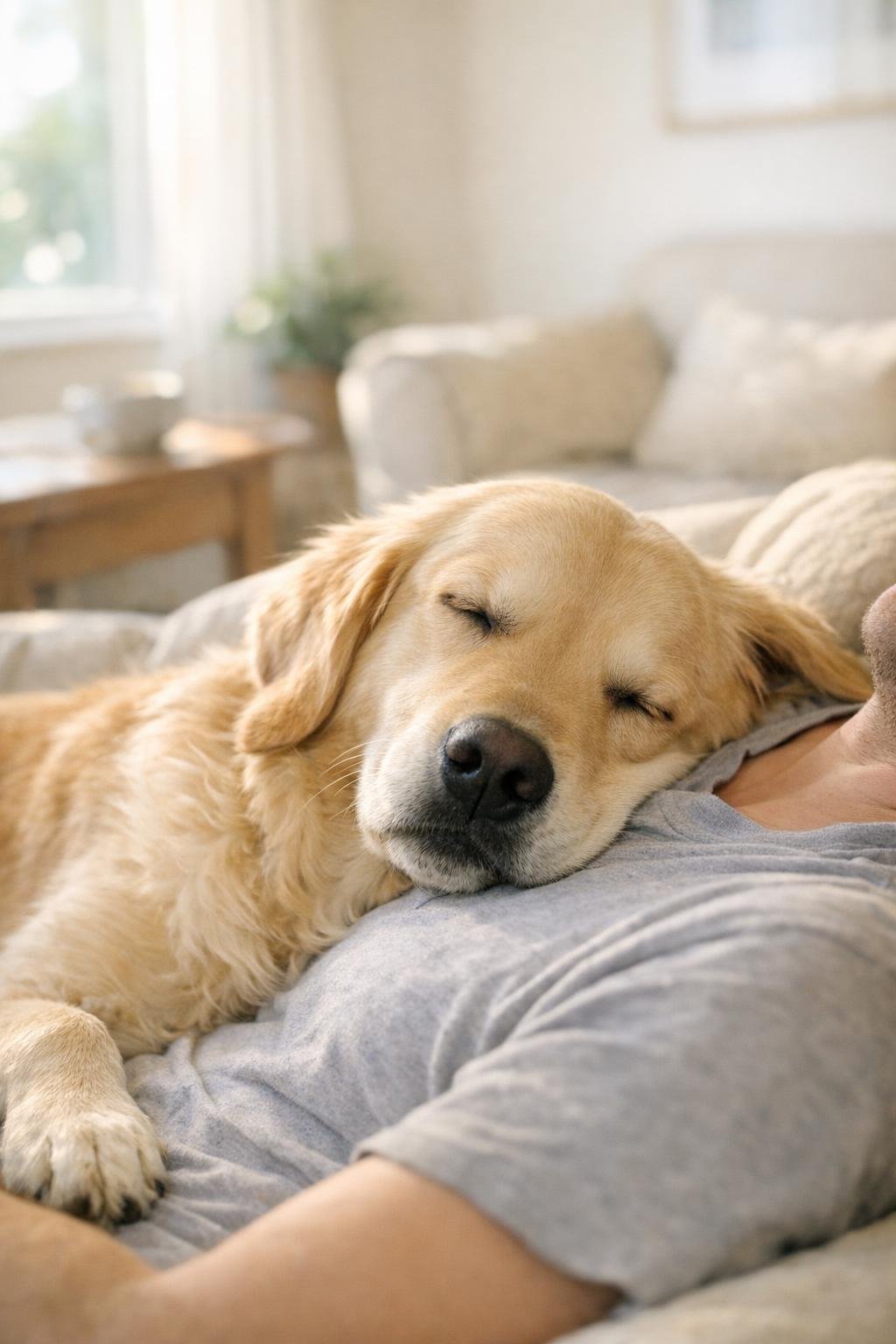
When a dog lays their head on your chest, it is usually a small blend of instinct, comfort, habit, and love. If you pay attention to the timing, body language, and any changes from their usual routine, you can often tell whether it is simply sweet affection or a sign they need a little extra help.