
 Dogs
 Cats
 Birds
 Horses
 On the Land
 In the Sea
I’ve lived with dogs long enough to know that bedtime is never random. You may buy the nicest dog bed in the house, fold a soft blanket in the corner, and still find your old friend curled up right at the foot of your bed night after night. For many of us devoted dog people, especially those of us sharing our home with a senior dog, that little sleeping spot can feel oddly specific.
The truth is, there are several practical and emotional reasons dogs choose that place. Some are about comfort, some are about instinct, and some are their quiet way of staying close without getting in the way. Here are 8 surprising reasons your dog may prefer the foot of the bed over anywhere else.
1. It lets them stay close without being crowded
Many dogs want the comfort of being near us, but they do not necessarily want a full-body cuddle all night. The foot of the bed gives them a middle ground: they can smell you, hear your breathing, and feel the mattress move, while still keeping 2 to 3 feet of personal space. I’ve seen this often with older dogs who still want companionship but are less tolerant of being bumped in the ribs or shoulders while they sleep.
That position also lets them stretch out or curl up on their own terms. A medium dog can usually fit comfortably across the lower 18 to 24 inches of a queen bed, especially if they like to sleep diagonally. It’s close enough for connection, but far enough away to avoid elbows, shifting legs, and heavy blankets.

2. The foot of the bed is often cooler
Dogs run warmer than we do, and many naturally look for the coolest sleep zone they can find. The top half of the bed tends to trap more body heat from our torso, pillows, and layered blankets, while the foot often stays a few degrees cooler and gets a bit more airflow. If your dog has a thick coat, arthritis, or simply overheats easily, that cooler patch can be the most comfortable place in the room.
I notice this especially in homes with flannel sheets, heavy comforters, or winter heating running overnight. A dog may start near your knees and slowly inch downward until they reach the uncovered edge. If they frequently kick off blankets, pant for a minute before settling, or choose tile floors during the day, temperature is likely part of the reason.
3. It gives them a good lookout position
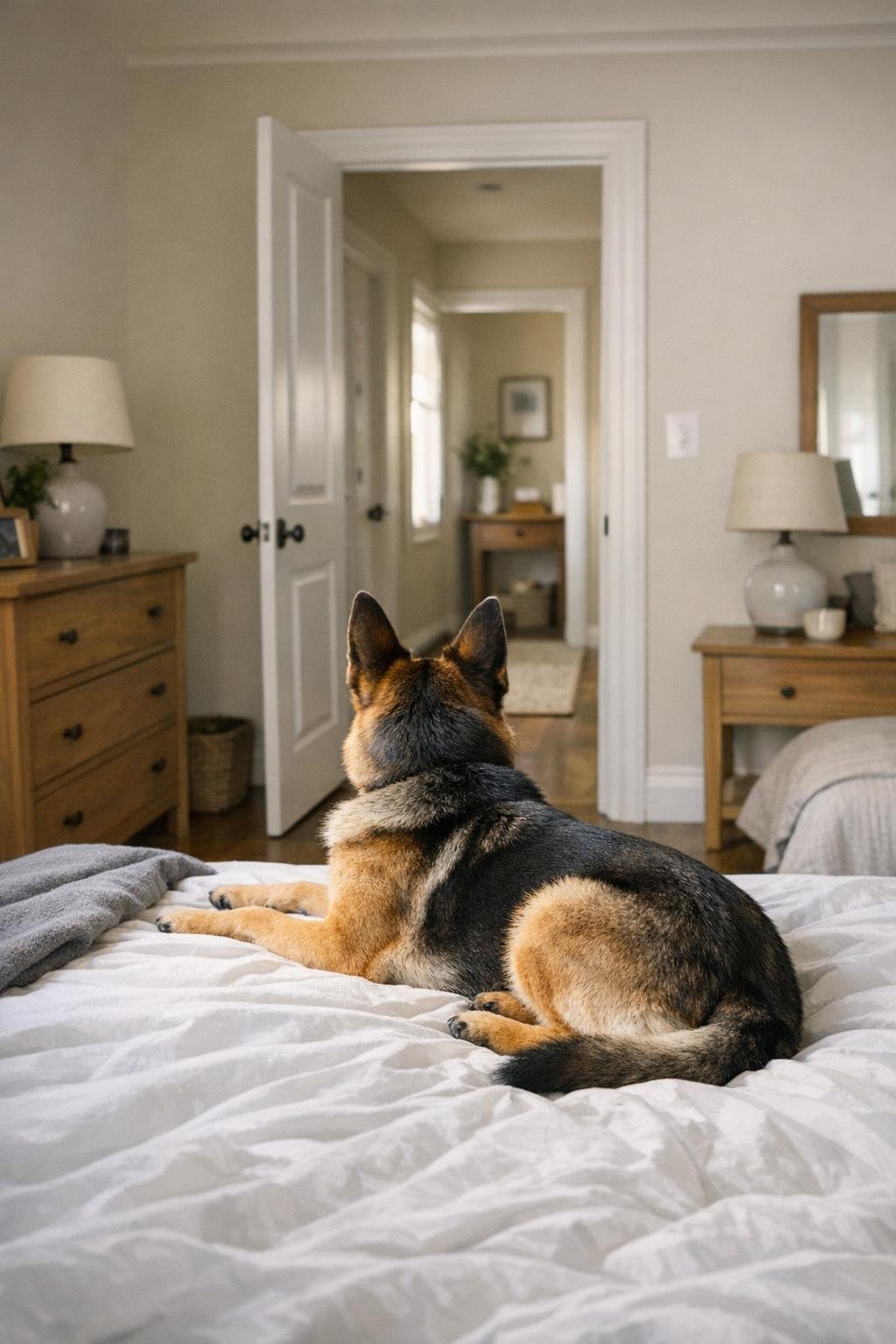
Even relaxed house dogs keep a bit of their old protective instinct. From the foot of the bed, they have a direct view of the bedroom door, hallway, or main path into the room. That spot lets them rest while still monitoring changes in light, movement, or sound. A dog who sleeps there may simply feel they are on gentle night duty.
This is especially common in dogs that perk up at footsteps, delivery noises, or the central heat clicking on. The foot of the bed is like a low-effort observation post: they can lift their head in one second, assess the room, and settle back down. For a loyal dog, that can feel like the perfect balance between rest and watchfulness.
4. They may be adjusting for aging joints
Senior dogs often become much more particular about where they sleep. The foot of the bed can be easier on stiff hips, knees, and backs because there is less movement there than in the center or upper half of the mattress. If you turn from side to side several times a night, your dog may have learned through experience that the lower end of the bed stays steadier.
It can also be the easiest place to get on and off. Many older dogs choose the corner nearest a bench, ottoman, or pet step that is 12 to 16 inches high, because it lets them climb down with less impact. If your dog pauses before jumping, circles carefully three or four times, or sighs when lying down, comfort and joint protection may be driving that bedtime choice.
5. Your nighttime movement may be pushing them there
Sometimes the answer is less sentimental and more mechanical: we move a lot. Kicking legs, shifting blankets, getting up for the bathroom, or changing position every hour can make the middle of the bed a poor choice for a light-sleeping dog. The foot of the bed offers a safer zone with fewer surprises.
Dogs are excellent pattern readers. If your dog has been bumped once or twice near your knees or hips, they may decide the lower end is the wiser long-term option. I’ve known dogs who began at their owner’s side at 10 p.m. and migrated downward by midnight, simply because that last 20 inches of mattress gave them uninterrupted sleep.

6. They are following an old den instinct
Dogs still carry nesting instincts that influence how and where they settle. The foot of the bed often feels more enclosed because it is bordered by blankets, the mattress edge, and sometimes a footboard. To a dog, that can resemble a protected den-like pocket where they can tuck in and relax.
You’ll often see clues before they lie down: pawing the blanket, circling once or twice, or pressing their back against the edge of the bed. Smaller dogs in particular seem to like that contained feeling, but I’ve seen big dogs do it too, folding themselves into a surprisingly tight curl in the same lower corner every night. It is less about stubbornness and more about instinctive comfort.
7. They may be respecting your space
Some dogs are remarkably considerate, especially if they’ve lived with you for years and know the household rules. A dog who has been gently taught “down,” “move over,” or “this side is yours” may settle at the foot of the bed because they understand that it is the least intrusive place to be. That is not distance; it is cooperation.
I’ve seen this most with deeply bonded older dogs who no longer need to prove anything. They know where you are, they know they belong, and they choose a spot that keeps everyone comfortable. If your dog waits for you to get in first, then hops up and lies across the lower edge, that is often a polite routine they have built around you.
8. It can be their way of guarding your most vulnerable hours
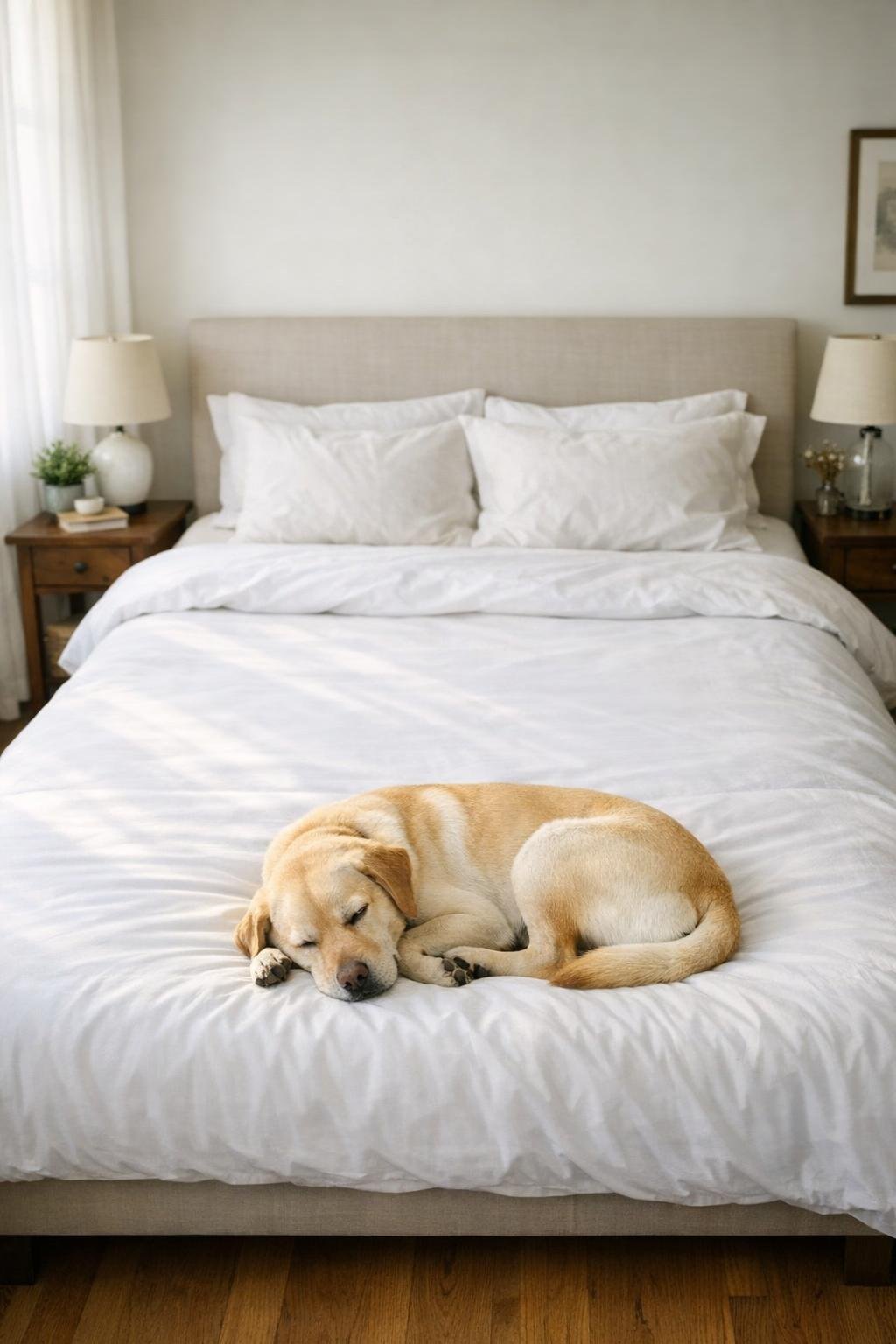
Dogs are often most attached to us when we are still, quiet, and vulnerable. Sleeping at the foot of the bed gives them immediate access to you while also placing them between you and the room. They may not be making a grand protective statement, but many dogs seem to feel more settled when they can keep tabs on you through the night.
This can be especially true after changes like illness, grief, a move, or the loss of another pet. A dog may begin sleeping at the foot of the bed more consistently during those times because closeness becomes part of their routine of care. It’s one of those humble canine gestures that says, in their own practical way, “I’m here, and I’ve got the night watch.”
If your dog sleeps at the foot of your bed, chances are they’ve found the spot that best meets their needs while keeping close to you. In my experience, that little patch of mattress is often a mix of comfort, instinct, and devotion—and that makes it a pretty special place to be chosen.