
 Dogs
 Cats
 Birds
 Horses
 On the Land
 In the Sea
If your dog has made a habit of curling up right under your chair the minute you sit down to answer emails, pay bills, or settle in for a long afternoon at the computer, you’re definitely not imagining things. Dogs pick their nap spots for reasons, and over the years I’ve learned that the space under a chair can feel like prime real estate to them. It’s not always random, and it’s not always just clinginess either.
As someone who’s spent plenty of work-from-home days carefully scooting my chair back without bumping a snoozing dog, I can tell you there are a few surprisingly practical explanations behind this behavior. If you’ve got an older dog in particular, some of these reasons can be especially relevant, because comfort, routine, and security start to matter even more with age.
1. Your chair feels like the safest spot in the room
Many dogs see the area under a chair as a small, protected den. Instead of stretching out in the middle of an open floor, they can rest with a “roof” above them and solid chair legs around them. For an older dog, that enclosed feeling can be calming, especially in a busy house with grandchildren visiting, a television on in the next room, or people walking past every 10 or 15 minutes.
I’ve noticed this most with dogs that startle more easily as they age. A tucked-away spot under your chair limits traffic from all sides, so they can relax without feeling exposed. If your dog chooses that spot over a large bed across the room, they may simply feel more secure there.
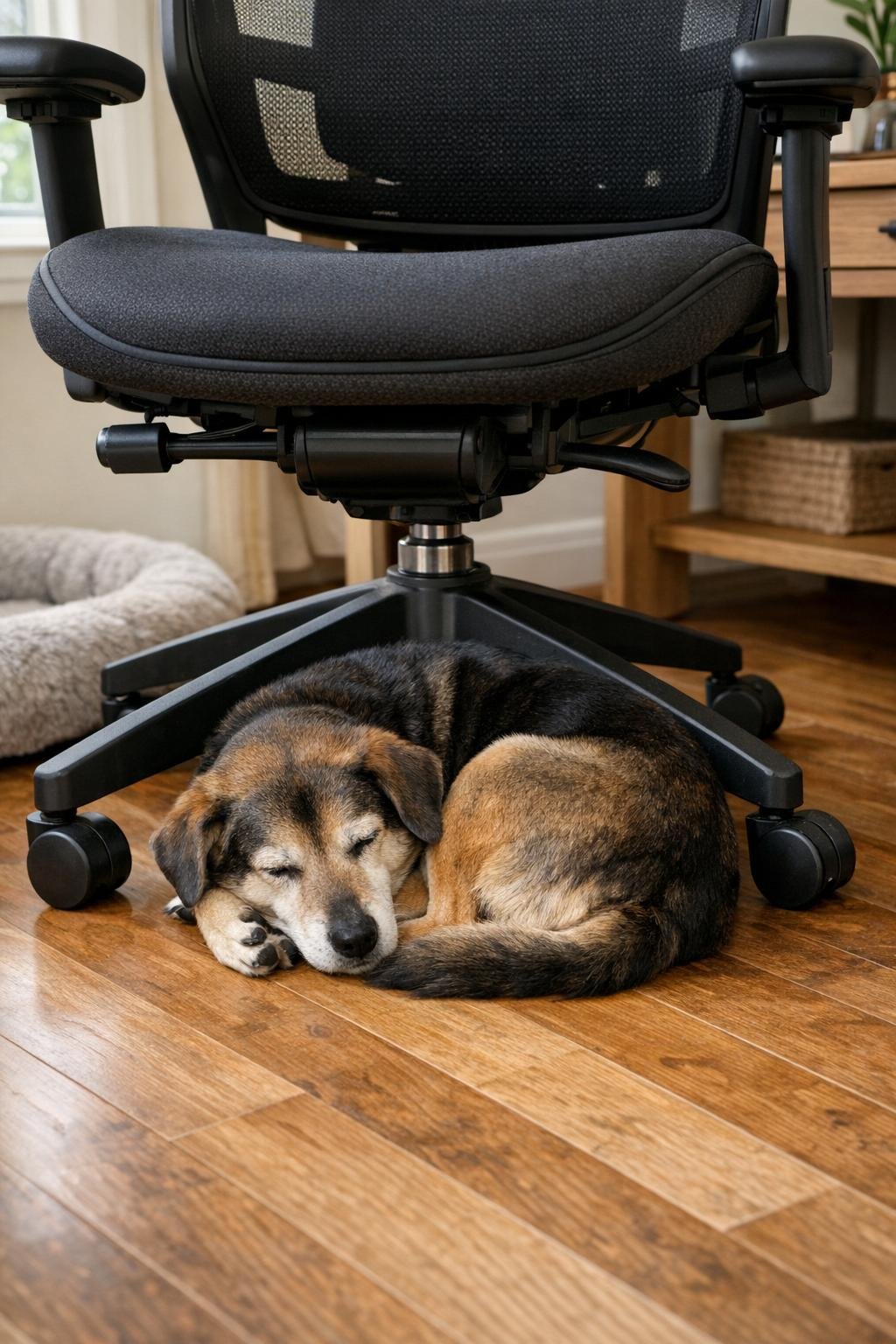
2. They want to stay close without being bothered
Some dogs want your company, but not your constant attention. Sleeping under your chair lets them be within 1 or 2 feet of you without being petted, talked to, or accidentally invited into more activity than they want. That’s especially common in older dogs who still want companionship but tire more quickly than they used to.
Think of it as quiet togetherness. They can hear your voice, smell your scent, and keep track of where you are, all while getting uninterrupted rest. It’s a very dog-like compromise between affection and personal space.
3. The floor under your desk may be cooler or warmer than the rest of the room
Dogs are incredibly practical about temperature. In summer, the patch under your chair might be on cool hardwood, tile, or laminate that stays several degrees cooler than a rug in the middle of the room. In winter, that same area may catch heat from a nearby floor vent, space heater, or even the warmth your body gives off while you sit there for hours.
Older dogs often become more temperature-sensitive, especially if they have thinning coats or arthritis. If your dog consistently chooses that exact 2-by-3-foot patch under your chair, check the flooring and airflow. You may find they’ve picked the most comfortable microclimate in the whole room.
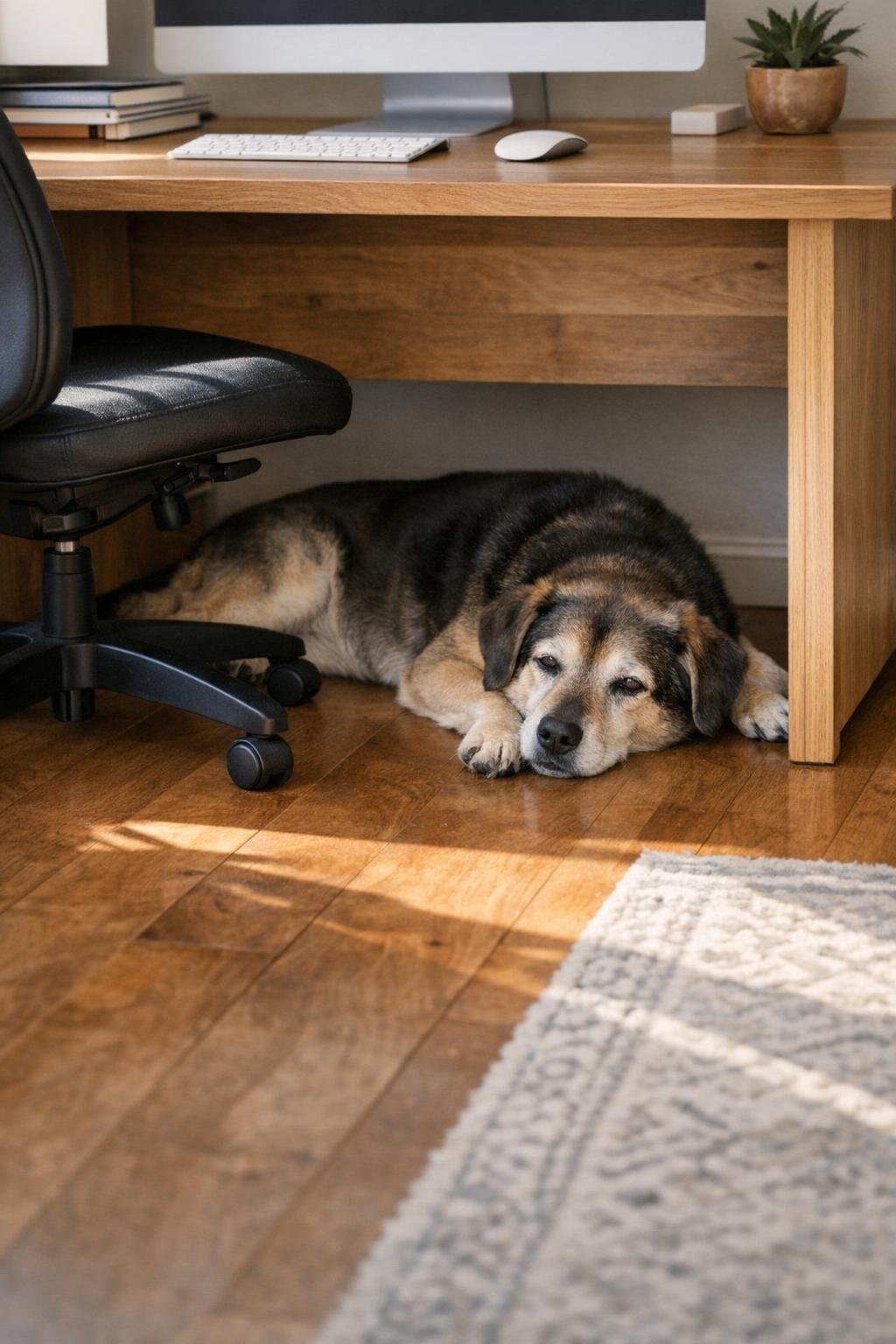
4. Your movements reassure them that everything is normal
Dogs pay close attention to small patterns: your typing, the squeak of the chair, the sound of a mug being set down, even the rhythm of your feet shifting on the floor. For some dogs, especially seniors, those familiar noises act like a reassurance signal. As long as you’re doing your usual workday routine, the world feels predictable.
This can matter even more for dogs who have grown a bit anxious with age. Changes in hearing, vision, or cognition can make everyday life feel less certain. Being close enough to sense your ordinary movement every few minutes can help them settle more deeply.
5. They may be guarding you in a gentle, low-key way
Not every protective dog stands at the window barking. Some simply position themselves where they can monitor you and the room at the same time. Under your chair gives them a strategic place to keep tabs on the doorway, hallway, or main traffic path while staying physically close to you.
With older dogs, this often looks subtle rather than intense. They may nap lightly, lift their head when someone walks by, then settle again within 5 seconds. It’s less about being on high alert and more about quietly keeping watch over their person.
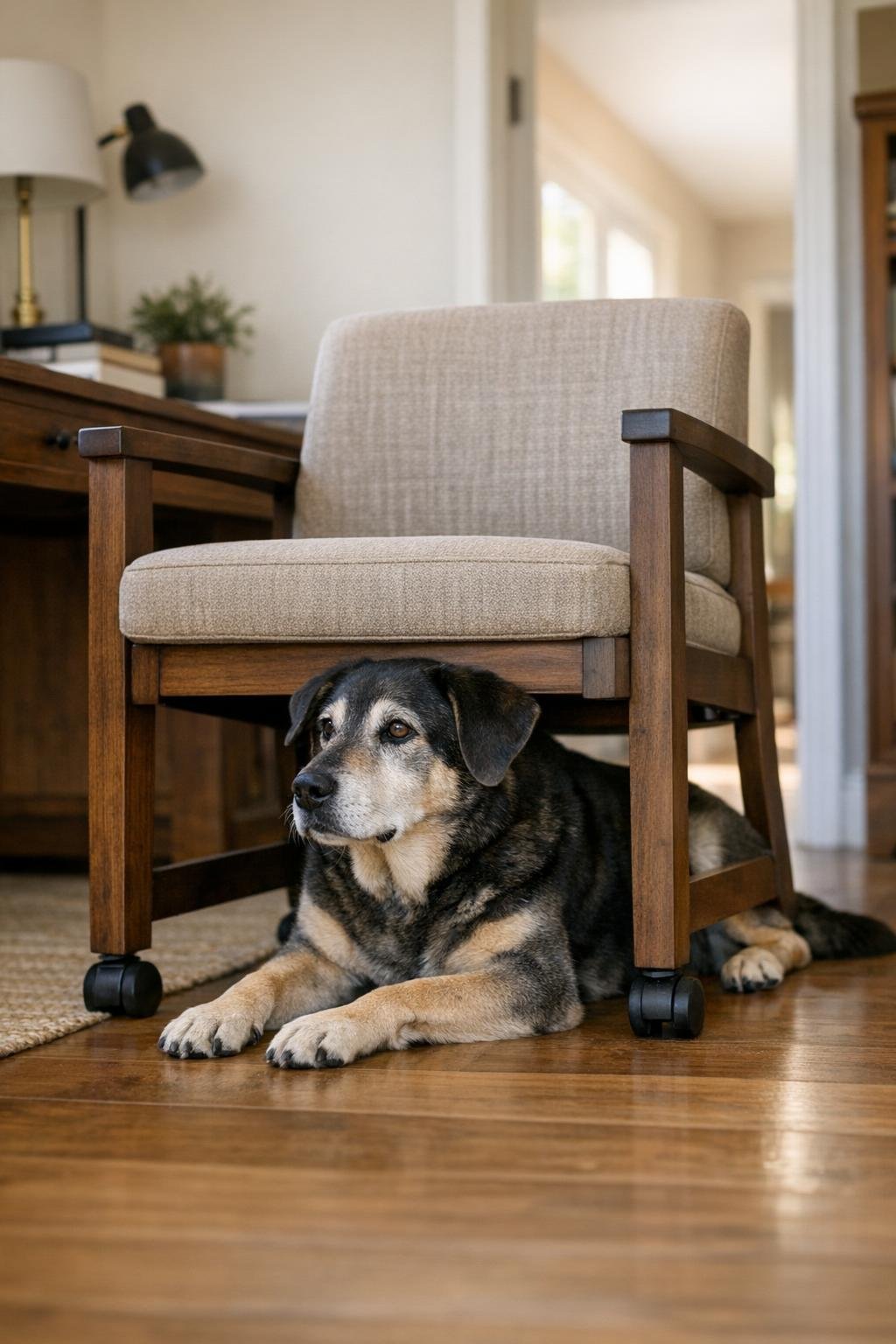
6. Joint pain can make getting up and moving less appealing
If your older dog settles under your chair once and then stays there for 2 or 3 hours, comfort may be only part of the story. Arthritis, hip stiffness, or sore elbows can make repeated trips across the room less appealing. If they already made it to your side, they may choose to remain there instead of relocating to a bed that’s 8 feet away.
This is worth noticing if your dog seems slower rising, hesitates before using stairs, or circles more carefully before lying down. In that case, the behavior may be telling you that convenience matters more now. An orthopedic bed placed right beside your chair can make a big difference.
7. They’ve turned your work routine into their nap routine
Dogs love schedules, and they often build their day around ours. If you sit down to work at 9:00 every morning, answer calls until noon, and stay in the same chair most weekdays, your dog may have linked that entire block of time with rest. Under your chair becomes their designated “morning nap zone,” just as surely as the kitchen means breakfast.
I think this surprises people because it feels emotional, but sometimes it’s beautifully simple conditioning. You sit, they settle. You open the laptop, they circle once and lie down. After enough repetition, the habit becomes automatic and comforting.
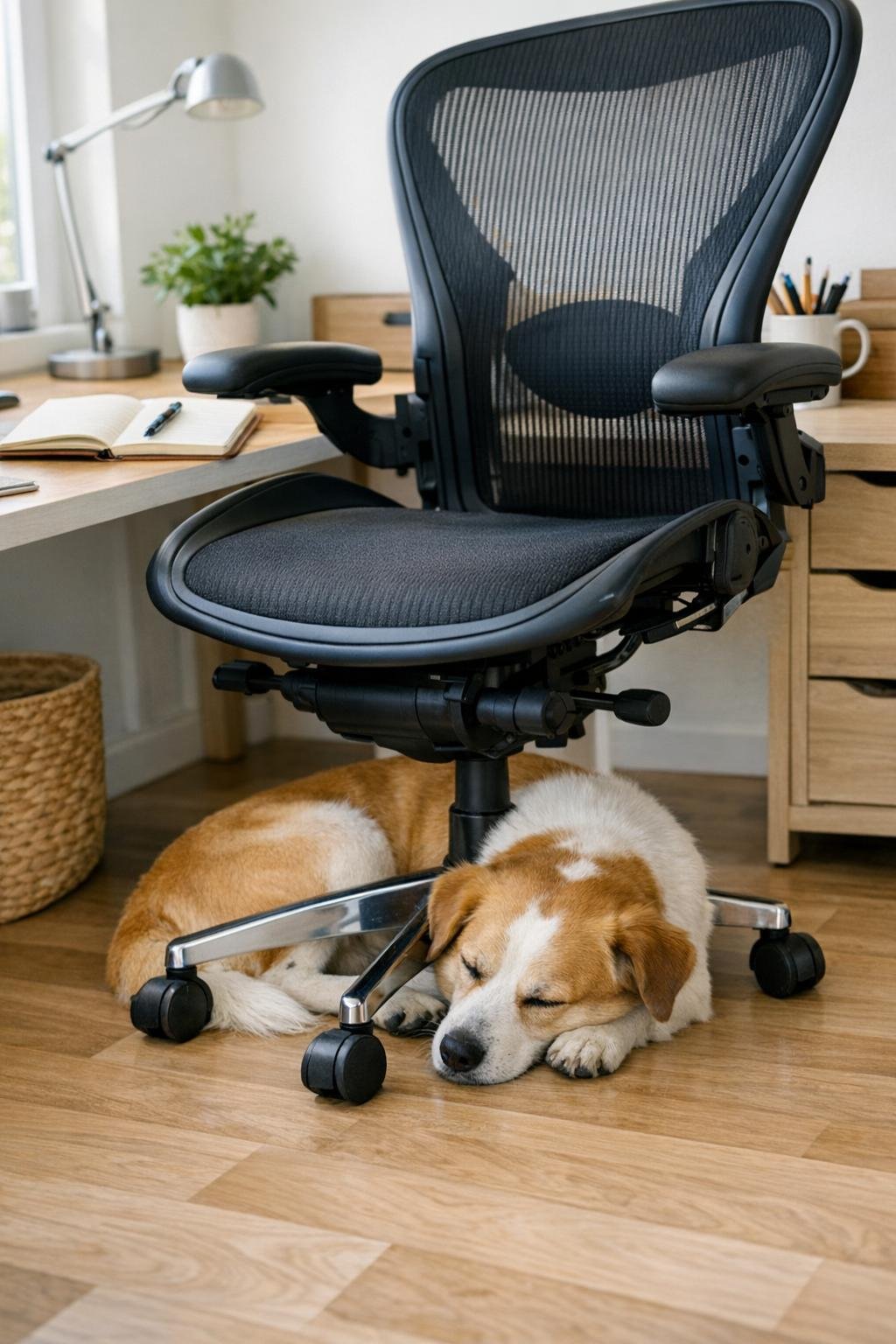
8. Sometimes it’s their way of asking for a little extra connection
Yes, there are practical reasons dogs sleep under your chair, but sometimes the sweetest explanation is also the right one: they just want to be near you. Older dogs often become more people-oriented, not less. They may seek out contact, proximity, and familiar scents more often, especially if their world has gotten smaller with age.
If your dog seems content, sleeps well there, and perks up the second you stand, it may be their quiet way of saying, “I’m good as long as we’re together.” Honestly, that’s the explanation that gets me every time. There’s something very touching about being chosen as someone’s favorite place to spend an afternoon.
If your dog sleeps under your chair while you work, it’s usually a blend of comfort, habit, and attachment rather than anything mysterious. Paying attention to the pattern can help you understand whether your dog is simply being affectionate or whether they might benefit from a few senior-friendly comfort upgrades nearby.